Last updated 2026-07-09
TL;DR
Tennessee inspects licensed family childcare homes at least twice a year, unannounced. Surveyors from the Department of Human Services check nine categories: physical environment, caregiver ratios, health records, medications, fire safety, transportation, child records, nutrition, and emergency plans. Know exactly what they look for before they knock, and you pass clean.
Who inspects Tennessee home daycares and how often?
The Tennessee Department of Human Services runs all inspections for licensed family childcare homes, through its Child Care Licensing unit. [1] The unit conducts at least two unannounced inspections per 12-month licensing period. One is usually a full compliance survey. The other might be a focused visit or a complaint follow-up. When a complaint comes in, expect an extra unannounced visit within a few days of DHS receiving it.
Before your initial license is issued, you also get an announced pre-licensing inspection. That one is a full walk-through. A surveyor goes room by room and asks to see every required document. Treat it like a dress rehearsal. Fail it and your opening date slips, sometimes by weeks.
Tennessee's inspection results are public. Parents can look up your facility's compliance history on the DHS child care website. [1] That transparency is a real business reason to keep your record clean, and it matters more than most providers assume.
What are the nine inspection categories for TN family childcare homes?
The Rules of the Tennessee Department of Human Services for Family Childcare Homes (Chapter 1240-04-01) sort compliance into these areas: [2]
1. Physical environment and space requirements 2. Caregiver qualifications and ratios 3. Health and immunization records for children 4. Medication administration 5. Fire and safety equipment 6. Transportation safety (if applicable) 7. Child enrollment and attendance records 8. Nutrition and food service 9. Emergency preparedness
Every one of these shows up on the standardized inspection form surveyors carry. Handle all nine before the visit and you have covered the full scope of what DHS checks.
The rules run several dozen pages. Here is the short version. Surveyors want documentation that you have done what you said in your application, and physical evidence that the space matches the paperwork.
What does the physical environment checklist cover?
Space is the first thing a surveyor measures. Tennessee requires a minimum of 35 square feet of usable indoor play space per child, not counting hallways, bathrooms, or areas blocked by furniture. [2] If you are licensed for six children and your playroom is 180 square feet, you get a citation.
The physical environment checklist also covers:
- All exits unobstructed and reachable without a key.
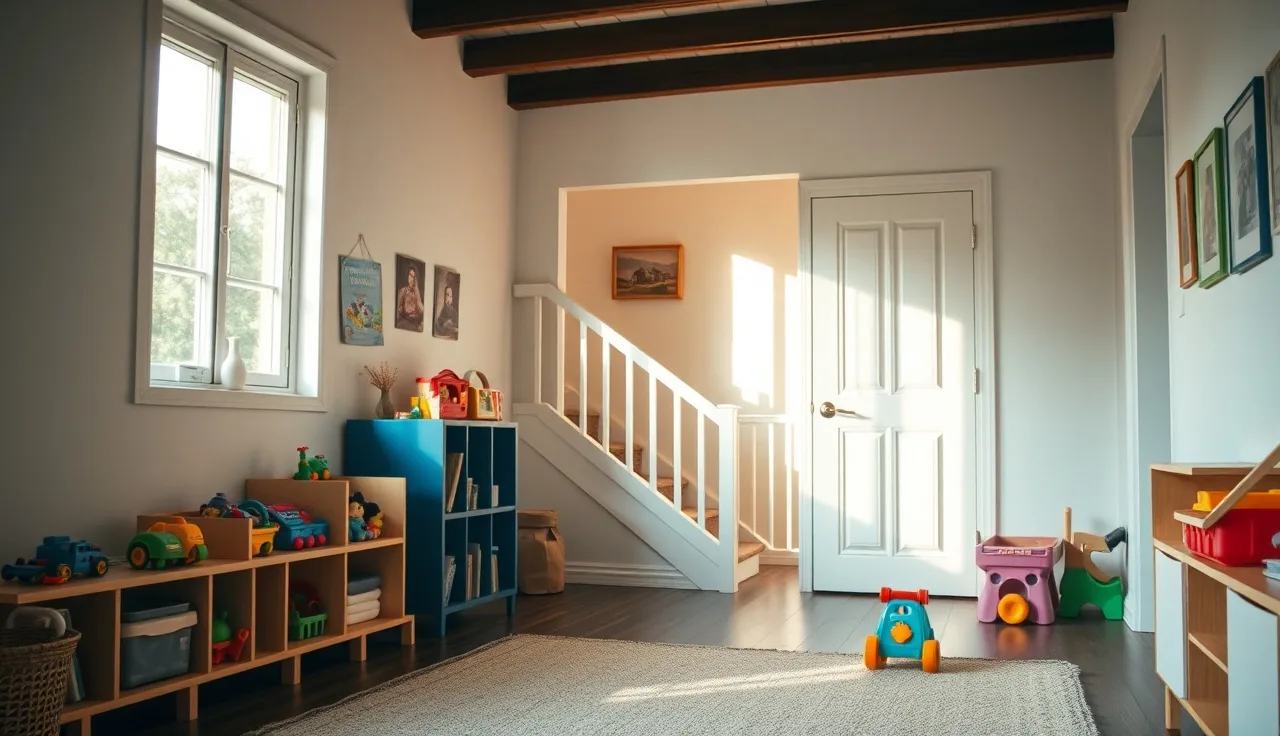
- Stairs used by children with handrails, and safety gates for children under three.
- Covers on electrical outlets within a child's reach.
- Cleaning supplies, medications, and toxic materials stored in locked or child-proof cabinets out of reach.
- Window blind cords kept inaccessible to children (a change that became federal guidance after strangulation deaths).
- Infant sleep equipment that meets current safe-sleep standards: firm, flat surface, no loose bedding, no positioning devices. [3]
- Outdoor play areas fenced with a child-resistant gate latch.
- Standing water (even a birdbath deeper than two inches) kept inaccessible.
Surveyors open cabinets, test gate latches, and look behind doors. Do not assume they glance from the doorway and move on.
Your cleaning routine feeds straight into physical environment compliance. A surveyor who sees soiled diapering surfaces, a dirty food prep area, or trash piling up near children's spaces will cite you under both sanitation and physical environment. See the daycare cleaning guide for the sanitizing schedules DHS expects.
What caregiver ratio and qualification records do inspectors check?
Tennessee sets these child-to-caregiver ratios for family childcare homes licensed for up to seven children, the standard family childcare home license: [2]
| Age group | Max children per caregiver |
|---|---|
| Infants (birth to 14 months) | 2 infants per caregiver (no more than 4 infants total in a home) |
| Toddlers (15 to 35 months) | 4 per caregiver |
| Preschool (3 to 4 years) | 6 per caregiver |
| School-age (5+) | 7 per caregiver |
| Mixed age | Calculated using the youngest child's ratio |
A Tennessee family childcare home can care for up to seven children at once, including the provider's own children under age 13 who are present. [2] Two kids of your own at home means you can enroll five paying children, maximum.
Inspectors check your caregiver qualification documents: a completed background check through the Tennessee Bureau of Investigation and FBI, proof of annual training hours (10 hours per year minimum for licensed providers), current pediatric first aid and CPR certification, and any child development credentials tied to a higher rating under Tennessee's STAR-Quality rating system. [1]
Background check clearance has to be on file before anyone is alone with children. That includes substitutes. It catches a lot of providers off guard when a regular substitute was never formally cleared.
What health and immunization records do you need on file?
Every enrolled child needs a signed Tennessee Immunization Certificate (form CN-0970) or a signed exemption form on file before the first day. [4] The immunization schedule has to match the current CDC Advisory Committee on Immunization Practices recommendations.
Beyond immunizations, each child's health record file must include:
- Enrollment date and emergency contact information
- Signed authorization for emergency medical treatment
- Any known allergies and a written allergy action plan
- Documentation of special health conditions or required accommodations
- Physical exam records if required by the parent's subsidy or enrollment agreement
Inspectors pull random files and check that every field is complete. A partially completed form counts as a violation the same as a missing one. Blank date fields are one of the most common reasons home daycares pick up health record citations.
Children on subsidy through Tennessee's Child Care Certificate Program (the state's CCDF-funded subsidy) carry extra attendance record requirements. CCDF is federally funded under 45 CFR Part 98, which requires states to set health and safety requirements as a condition of subsidy payment. [5] Tennessee DHS administers this, and surveyors verify that subsidy children's files are complete.
How does medication administration get inspected?
Medication is one of the highest-citation areas in Tennessee home daycare inspections, mostly because the documentation is more detailed than providers expect.
For any medication given at your home, you must have on file before the first dose a signed, dated parent authorization form that names the specific medication, the dose, the route, and the time of day. Verbal authorizations do not count. [2]
Prescription medications require the original labeled container with the child's name on the pharmacy label. Over-the-counter medications require the original container plus parent authorization. You cannot split a container between families.
Every dose goes in a medication administration record with the date, time, dose, and your initials. Inspectors check that log entries match the authorization forms.
Medications get stored out of children's reach, in original containers, at the temperature the label specifies. Refrigerated medications go in a clearly labeled container in your refrigerator, not loose on a shelf where another family member could grab them by mistake.
Controlled substances, certain ADHD medications for example, need an even tighter storage and logging protocol. If you have a child in your care on a controlled substance, call your DHS licensing consultant for the written guidance before the child starts.
What fire and emergency safety items do TN inspectors look for?
Tennessee requires a working smoke detector on every level of the home children use, basements included, and a carbon monoxide detector on every level with a fuel-burning appliance or an attached garage. [2] Inspectors press the test button. A detector with a dead battery fails the same as no detector at all.
Fire extinguishers must be present and inspected annually. The tag has to show an inspection date within the last 12 months.
You need a written fire evacuation plan posted where it is visible, and you must run and document fire drills at least monthly. [2] The drill log needs the date, time, number of children present, and how long the evacuation took. Surveyors ask for the last six months. If you started keeping logs only after a pre-survey notice, the gap is obvious.
Emergency preparedness documents must include a shelter-in-place plan (tornado or severe weather), an off-site evacuation plan, and a plan for notifying parents. Name the off-site evacuation location specifically. "A neighbor's house" does not cut it.
First aid kits go in the home and in any vehicle used to transport children. The rule does not prescribe contents, but DHS guidance points to the American Red Cross standard kit list. [6]
What transportation records does Tennessee require if you drive children?
Not every family childcare home transports children. If yours does, it adds a real layer to your inspection. [2]
Required for each vehicle:
- Current vehicle registration
- Proof of automobile liability insurance (see daycare liability insurance for coverage amounts that fit this use)
- A current driver's license for every person who drives children
- Age and weight-appropriate car seats or boosters for every child, installed and used correctly
- A sign or banner indicating children are on board
You cannot transport more children than the vehicle has working seat belts. A seven-passenger minivan does not automatically let you carry seven children. Infant carriers in certain seating positions can drop the usable count.
Surveyors ask to see the actual car seats during a transportation inspection. They check that each seat's manufacture date falls within the usable window (most infant and convertible seats expire six to ten years from manufacture) and that installation matches the seat's instructions.
Drivers face the same background check requirements as caregivers.
What does the nutrition and food service checklist include?
If you participate in the USDA Child and Adult Care Food Program (CACFP), your food service gets a separate federal audit on top of the DHS inspection. [8] Even outside CACFP, Tennessee's rules require any meals or snacks you serve to meet minimum nutrition standards. [2]
The inspection checks:
- Menus posted and dated, with actual food served matching the menu
- Age-appropriate portion sizes and meal components (the CACFP meal pattern is the standard reference)
- Food storage temperatures: refrigerator at or below 41 degrees F, freezer at or below 0 degrees F
- No food served from a dented, rusted, or swollen can
- Children with food allergies never served their allergen
- No child forced to eat, with food refusal documented
A common citation is the allergy documentation gap. A child has a documented allergy, but the posted menu does not note the substitution. Even if you know by heart not to serve that child peanut butter, the written record has to say so.
Kitchen sanitation ties back to the physical environment standards. Diaper changing never happens in the food prep or storage area, and the surfaces used for each stay clearly separated and separately sanitized.
What records do inspectors pull during a Tennessee home daycare visit?
Roughly half the inspection happens at your desk or kitchen table, reviewing documents. A single binder or folder system organized by category cuts your review time a lot and tells the surveyor you run a serious operation.
Records to keep immediately accessible:
- Current license and any attached variance approvals
- Enrollment records for all currently attending children, with signed enrollment agreements
- Attendance sheets for the current month plus at least the prior three months
- Emergency contact and medical authorization forms for every child
- Immunization certificates for every child
- Medication authorization and administration logs
- Caregiver background check clearance letters
- Caregiver training records (10-hour annual minimum) and CPR/first aid cards
- Fire drill logs (at least six months)
- Menus for the current week and prior four weeks
- Vehicle inspection documents and car seat records (if transporting)
- Incident or injury reports from the past 12 months
Incident reports deserve extra attention. Tennessee requires that any injury needing professional medical attention be reported to DHS within 24 hours. [2] The written report stays in your file. Surveyors compare injury reports against complaints logged in the state system. A gap between what parents reported and what you filed raises a red flag.
ChildCareComp's compliance toolkit includes fillable versions of many of these forms organized by the Tennessee inspection categories, which saves a few hours when you are building your file system from scratch.
What are the most common violations TN home daycares receive?
Tennessee DHS does not publish a ranked violation list the way some states do. Licensing consultants who work with family childcare homes point to the same categories again and again.
Documentation gaps. Missing or incomplete child files, outdated immunization records, and unsigned enrollment forms are the single most common citation group. They are also the easiest to fix ahead of time.
Ratio violations. Taking one child too many without updating your enrollment cap, or forgetting to count your own children under 13 in the total, triggers automatic citations.
Smoke and CO detector failures. Dead batteries and detectors past their manufacturer expiration date (most are rated seven to ten years) catch a surprising number of providers.
Safe sleep non-compliance. Soft bedding in cribs, inclined sleepers, and positioning wedges still turn up in infant rooms despite Consumer Product Safety Commission and AAP guidance. [3][10]
Outdated first aid and CPR certification. Pediatric certifications usually expire every two years. A card that lapsed three months ago still fails.
Unlocked cleaning supplies. Under-sink cabinets in kitchens and bathrooms without child-proof latches are the most common physical environment citation.
None of these is hard to fix. The problem is that providers know the rules but rarely walk their own space with an inspector's eye. A self-audit using the actual DHS inspection form, available on the DHS website [1], run every quarter, is a reasonable habit.
What happens after a failed inspection in Tennessee?
A failed inspection does not automatically revoke your license. Tennessee uses a corrective action system. Most violations get a written notice with a deadline to fix, usually 30 days for items that are not an immediate threat. [1]
Violations are graded by severity:
- Type A (immediate threat to health or safety): Corrected on the spot, or children leave the facility. Examples: a caregiver alone with more children than allowed, or no functioning smoke detector in a child's sleep area.
- Type B (less immediate but significant): Correction required within 30 days, confirmed by a follow-up visit.
- Repeat violations: A violation that appears on two consecutive inspections without correction escalates. That can mean a conditional license, a civil penalty, or revocation proceedings.
Tennessee's civil penalty schedule starts at $25 per day for Type B violations and rises to $100 per day for repeat Type A violations under Tenn. Code Ann. § 71-3-507. [7] Not huge numbers individually, but they stack up over a 30-day correction window.
You can appeal a citation through the administrative hearing process. The timeline and steps are spelled out in the written notice you receive. Most experienced licensing consultants say correct first and appeal later if you think the citation was wrong. Operating under an uncorrected citation while you appeal is a risky play.
For how inspection and compliance fees fit your budget, the daycare cost guide breaks down the full cost picture for home-based providers.
How do you prepare for a Tennessee home daycare inspection?
The best prep is using the DHS inspection form as your own audit tool. Tennessee DHS makes the family childcare home inspection instrument available on its website. [1] Print it, walk your space with it, and be honest.
A practical pre-inspection routine:
1. Pull every child file and confirm it is complete: immunization certificate, emergency contacts, signed enrollment agreement, allergy documentation. 2. Test every smoke and CO detector. Replace batteries even if they still work. A surveyor cannot tell a month-old battery from a year-old one, but you can. 3. Open every cabinet a child could reach and lock or remove anything that fails the toxic materials check. 4. Check every car seat's manufacture date and re-read the installation instructions. 5. Count current enrollment against your licensed capacity, including your own children under 13. 6. Review the last six months of fire drill logs. If a month is missing a drill, document why. 7. Confirm every caregiver's background check clearance, CPR card, and training log is current.
Do this quarterly, more than before a renewal. Inspections are unannounced, so the only way to reliably pass is to stay inspection-ready every week.
Home daycare insurance often surfaces during an inspection when a surveyor asks about transportation or wants to see your liability policy. The home daycare insurance guide covers what Tennessee providers actually need and what a standard homeowner's policy leaves uncovered.
Frequently asked questions
How many times a year does Tennessee DHS inspect a family childcare home?
At minimum, twice per 12-month licensing period, both unannounced. A complaint triggers an additional unannounced visit, usually within a few days of DHS receiving it. Providers with prior violations may see more frequent visits during a corrective action period. Your pre-licensing inspection, done before your initial license is issued, is announced and separate from the ongoing annual count.
What is the maximum number of children a Tennessee family childcare home can watch?
A standard Tennessee family childcare home license allows up to seven children total, including the provider's own children under age 13 who are in the home. Two school-age children of your own at home during care hours drops your maximum enrolled count to five. A separate large family childcare home license allows up to 12 children with an additional qualified caregiver present.
Does Tennessee require a background check for everyone in the home?
Yes. Any person 18 or older who lives in the home, and any substitute caregiver who might be alone with children, must have a cleared background check through both the Tennessee Bureau of Investigation and the FBI before they are present during operating hours. The clearance letter has to be on file and available during inspection. A household member who is not cleared is a Type A violation.
What safe sleep rules does Tennessee enforce during inspections?
Tennessee follows the American Academy of Pediatrics safe sleep guidelines. Infants sleep on a firm, flat surface, on their backs, with no loose bedding, bumpers, pillows, or positioning devices. Inclined sleepers and rockers cannot be used as sleep equipment. Each infant needs their own individual sleep space. A surveyor physically checks the sleep area and removes or cites prohibited items on the spot.
How many training hours does a Tennessee licensed family childcare home provider need each year?
The minimum is 10 clock hours of documented childcare training per year. Training has to cover child development or child safety topics; general business courses do not count unless they are childcare-specific. Documentation means a certificate or sign-in sheet with the topic, date, provider, and hours. Inspectors check that the training content is approvable, more than that a certificate exists.
Do I need a fire drill log for a home daycare in Tennessee?
Yes. Tennessee requires monthly fire drills, and you must keep a written log of each one showing the date, time, number of children present, and evacuation time. Surveyors typically request at least the past six months. Missing months without a documented reason generate a citation. Tornado drills are also required; DHS guidance suggests at least two per year.
Can I give a child over-the-counter medication at my Tennessee home daycare?
Yes, with a signed, dated parent authorization form completed before the first dose. The form must name the specific medication, dose, route, and time. Use the original labeled container for that child, log every dose with the date, time, and your initials, and store the medication out of reach at the proper temperature. Verbal authorization is not sufficient under Tennessee rules.
What square footage does Tennessee require per child in a home daycare?
Tennessee requires a minimum of 35 square feet of usable indoor play space per child. Usable space excludes hallways, bathrooms, entryways, and areas blocked by furniture. If your licensed capacity is six children and your play space does not hit 210 square feet after exclusions, the surveyor cites you and requires either a capacity reduction or a space modification before the next visit.
What happens if a TN home daycare fails an inspection?
Most violations get a written corrective action notice with a 30-day deadline for items that are not an immediate threat. Type A violations, meaning immediate threats to child health or safety, must be corrected on the spot or operations pause. Repeat violations on two consecutive inspections escalate to conditional licensure, civil penalties starting at $25 per day, or revocation proceedings under Tenn. Code Ann. § 71-3-507.
Does Tennessee require a separate license for a large family childcare home?
Yes. A large family childcare home in Tennessee is licensed separately and allows 8 to 12 children. It requires a second qualified caregiver present whenever more than seven children are in care. The physical space requirements scale proportionally, and the application, fees, and inspection standards are stricter than the standard family childcare home license. Check with DHS licensing directly for current application requirements.
What does Tennessee require for a home daycare outdoor play area?
The outdoor play area must be fenced with a child-resistant latch on any gate children could reach. Inspectors check that the fence is in good repair with no gaps wide enough for a child to slip through. Standing water accessible to children is a citation, as is outdoor equipment with peeling paint, sharp edges, or hardware children can contact. A shade structure is not required by rule but is a best practice.
Are Tennessee home daycare inspection results public?
Yes. Tennessee DHS publishes inspection histories on its public child care website. Parents can search any licensed provider by name or county and see past inspection reports, including cited violations and whether corrections were made. That transparency means your compliance record is a real factor in enrollment decisions, more than a regulatory box to check.
Sources
- Tennessee Department of Human Services, Child Care Services: Tennessee DHS conducts at least two unannounced inspections per licensing year and publishes inspection results publicly
- Tennessee DHS, Rules for Family Childcare Homes, Chapter 1240-04-01: Ratios, 35 sq ft per child, medication documentation requirements, fire drill logs, and the nine inspection categories
- American Academy of Pediatrics, Safe Sleep Guidelines: Infants must sleep on a firm flat surface with no loose bedding, bumpers, or positioning devices
- U.S. Department of Health and Human Services, Administration for Children and Families, Child Care and Development Fund, 45 CFR Part 98: CCDF requires states to set health and safety requirements as a condition of subsidy payment to providers
- American Red Cross, First Aid Kit Contents Guidance: American Red Cross provides standard first aid kit content lists referenced by DHS guidance
- Tennessee Code Annotated § 71-3-507, civil penalties for childcare violations: Civil penalties start at $25 per day for Type B violations and reach $100 per day for repeat Type A violations
- USDA Food and Nutrition Service, Child and Adult Care Food Program: CACFP meal pattern standards serve as the reference for nutrition compliance in Tennessee home daycare inspections
- Child Care Aware of America: Background and context on state child care licensing and inspection frequency requirements
- U.S. Consumer Product Safety Commission, infant sleep product safety guidance: Inclined sleepers and positioning devices have been linked to infant deaths; CPSC guidance prohibits their use as sleep equipment