Last updated 2026-07-09
TL;DR
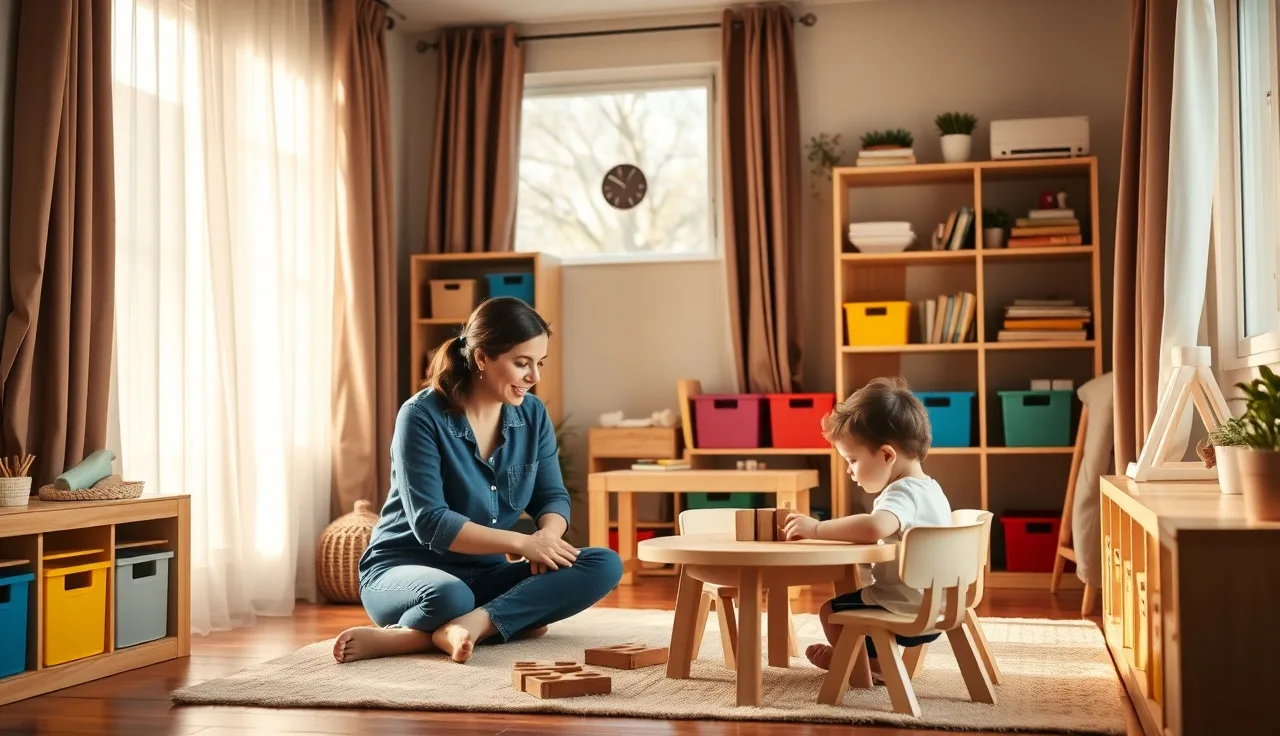
A registered home daycare is a family childcare home that has passed a state registration or licensing process, letting you legally care for a small group (usually 1 to 6 kids, sometimes 8 with an assistant). You need a background check, a home inspection, health and safety training, and often pediatric CPR. Fees run from $0 to about $200 depending on the state.
What exactly is a registered home daycare?
A registered home daycare is a childcare program the government has approved to run inside your private home. States use different words for the same thing. Some say "registered family childcare," some say "licensed family home," a few say "certified home daycare." The word matters because it decides which rulebook applies to you.
The federal Child Care and Development Fund (CCDF) splits care into two buckets: regulated and unregulated [1]. Regulated care is any setting that has to meet minimum health, safety, and staffing rules enforced by a government agency. If you take a subsidy payment for a child who qualifies for CCDF help, federal rules require your setting to be regulated in almost every case [1].
Registration is the lighter version of licensure. Some states run both as separate tiers. In those states a registered home might take up to 6 children with fewer rules, while a licensed home takes up to 12 and gets center-style inspections. Other states use one word and mean one thing. Look up your state's exact terminology before you assume anything.
One thing holds everywhere. If someone pays you to watch children in your home and you are not their relative, you almost certainly need state approval. Skip it and you are looking at fines, closure orders, and personal liability if a child gets hurt. Learn about daycare costs and what families pay once you are licensed.
How does registered home daycare differ from a licensed daycare center?
The real difference is scale, more than address. A registered home daycare runs in your house, with you (and maybe one assistant) caring for a small group. A licensed center sits in a commercial building, staffs multiple teachers, and usually holds 20 or more kids at once. Centers clear a much higher bar: sprinkler systems, commercial kitchens, credentialed directors, and inspections once or twice a year.
Home daycares trade size for closeness. Groups stay small, ratios stay tight, and the place feels like a home because it is one.
Home-based care is still a huge part of the market. The National Survey of Early Care and Education found that in 2019 roughly 1.8 million children under five were in home-based care, against about 3.7 million in centers [2].
Cost splits along the same line. Child Care Aware of America's 2024 report put the national median price for infant care in a family childcare home near $10,000 to $13,000 a year, versus $15,000 to $20,000 or more in a licensed center, with big swings by state [3]. Families pay less because your overhead is lower. That same low overhead is what makes home daycare work as a small business.
Comparing options for your own kid instead of opening a program? Read daycare costs, licensing, and rules: the complete 2026 guide.
What are the typical child-to-provider ratios for a registered home daycare?
Ratios for family childcare homes are set by each state, and they swing more than most new providers expect. There is no single federal ratio for home-based care. The CCDF Policies Database, kept by the Office of Planning, Research and Evaluation (OPRE), tracks these differences across all 50 states and DC [4].
The common pattern is simple. One provider can care for up to 6 children, usually counting the provider's own young kids. Add a qualified assistant and the cap often climbs to 8 or 10. Age mix changes everything. Many states count infants and toddlers more heavily, so three infants can put you at your limit long before you reach the headline number.
Here is a simplified look at how several states build their family home ratios:
| State | Max children (solo) | Max with assistant | Max infants (solo) |
|---|---|---|---|
| California | 6 | 8 (large family home) | 2 [5] |
| Texas | 6 | 12 (with aide, licensed home) | 4 |
| New York | 6 (family) / 2 under 2 | 8 (group family) | 2 [6] |
| Florida | 10 (family home, licensed) | 10 | 4 |
| Illinois | 8 | 12 | 3 |
These numbers reflect state licensing rules as of 2025 and change often. Check your own state agency's current regulations before you rely on any of it [5][6]. This table is a starting point, not a compliance document.
So figure out your age mix first, then look up your state's age-weighted rules. Filling six slots with six infants is probably illegal where you live, even when the raw count looks fine.
What are the steps to get a registered home daycare license?
The process changes by state but follows a shape you can plan around. Budget 6 to 16 weeks from application to approval. Backed-up inspection queues can stretch that.
Step 1: Contact your state licensing agency. Every state has a child care licensing office, usually inside the Department of Social Services, Health and Human Services, or a dedicated early childhood agency. The Child Care Aware of America directory links to each state's office [3]. Some states also run county-level licensing for certain program types.
Step 2: Attend an orientation. Many states make you sit through a pre-application orientation before they take your paperwork. It runs a half day or full day, sometimes online. Do not skip it. It is often the fastest way to learn exactly what your state wants.
Step 3: Complete background checks. You, every adult living in the home, and any employees need FBI fingerprint clearances and state criminal history checks [1]. Some states also require child abuse and neglect registry checks in every state where you have lived as an adult. Budget 2 to 6 weeks for results.
Step 4: Prepare your home. Your home has to pass a physical inspection: fire safety (working smoke detectors, carbon monoxide alarms, extinguishers), a stocked first aid kit, safe sleep setup for infants, a safe outdoor play area, locked storage for medications and cleaning supplies, and safe food handling. See daycare cleaning standards for what inspectors check inside.
Step 5: Complete required training. Most states want pediatric CPR and first aid, a set number of pre-service training hours (often 15 to 30), and sometimes a specific health and safety course. Some states let a Child Development Associate (CDA) credential count toward these.
Step 6: Submit your application and fee. Application fees run from $0 in some states to about $200 in others, with the median around $50 based on state fee schedules reviewed across several agency websites. Payment methods vary.
Step 7: Pass your inspection. A licensor visits, reviews your setup, checks your records, and either approves you, grants a conditional approval, or lists deficiencies to fix first. Conditional approval is common and is not a failure. You correct a few items and book a follow-up.
Once you have your registration, guard it. Keep training hours current, keep first aid certification active, stay inside your approved capacity, and document incidents and fire drills. Renewals usually land every 1 to 3 years.
What does a home daycare inspection look for?
Inspectors work from a checklist tied to your state's rules. The categories barely change from state to state even when the specifics do: physical environment, paperwork, and infant safety.
Physical environment checks cover smoke detectors on every level and in sleeping areas, a working carbon monoxide detector, a charged fire extinguisher, a posted evacuation plan, gates on stairs kids can reach, outlet covers, locked storage for all medications and toxic products, safe water temperature (many states cap water heaters below 120 degrees Fahrenheit to prevent scalding), and an outdoor play space clear of tripping hazards and poisonous plants.
Paperwork checks cover current first aid and CPR cards, a completed enrollment form for each child (emergency contacts and authorized pickups included), signed health and immunization records, written policies handed to families, and a posted license or registration certificate.
Infant checks are often the most detailed part of the visit. The licensor looks at your sleep area to confirm infants sleep on firm flat surfaces in their own space, never in bouncers or car seats, with no soft bedding. American Academy of Pediatrics safe sleep guidance gets written straight into many state licensing rules [7].
Unannounced inspections happen in most states at least once a year, and more often after a complaint. The first inspection before licensure is always scheduled. Be straight with your licensor. They have seen every setup imaginable and would rather help you fix a problem than write you up.
For more on the physical environment standards day to day, part-time daycare operational standards has useful crossover detail.
Do you need insurance to run a registered home daycare?
Your homeowner's or renter's policy almost certainly will not cover a home daycare. Most personal property policies exclude business activity in the home, so if a child is hurt in your care and the family sues, your insurer can legally deny the claim and leave you holding it.
You need two types of coverage at minimum. First, a business liability policy (often called daycare liability insurance) that covers injury to children or guests, property damage you cause, and in some forms professional liability for claims of poor supervision. Second, a business property rider to cover your daycare equipment, furniture, and supplies.
Some states require liability insurance as a condition of registration. Others recommend it but stop short of mandating it. Either way, running bare is reckless. A single slip-and-fall claim can top $100,000.
Premiums for a small home program usually run $300 to $700 a year, though that range is rough and moves with your capacity, state, and insurer. Read home daycare insurance and daycare liability insurance before you buy anything. The coverage terms matter as much as the price.
Can a registered home daycare accept subsidy payments (CCDF)?
Yes, and this is one of the most money-relevant calls you will make as a provider. The Child Care and Development Fund is the main federal childcare subsidy program, run by the states, and it served about 1.4 million children a month in 2022 [1]. Low and moderate income families who qualify get a subsidy that pays part or all of their cost, and the payment goes straight to the provider.
To take CCDF subsidies, you have to be in a regulated setting in most states. The 2014 Child Care and Development Block Grant Act reauthorization tightened health and safety rules for all CCDF-funded providers and forced states to set minimum standards [1]. The law spells out what those rules have to address: "Health and safety requirements for child care providers who receive CCDF funds must address: prevention and control of infectious diseases; building and physical premises safety; and health and safety training." [1]
Getting onto your state's CCDF provider list is a separate enrollment, sometimes through the same office as licensing and sometimes not. You sign a provider agreement, accept the state's reimbursement rate, and turn in attendance records to get paid. Those rates are set by the state and often sit below market, sometimes well below. Some states are trying to close that gap after the American Rescue Plan Act of 2021 pushed a large one-time increase into CCDF [1].
Curious (or worried) about subsidy fraud? The minnesota daycare fraud investigation is a documented case study in what happens when CCDF oversight breaks down.
How much does it cost to start and run a registered home daycare?
Startup costs run lower than most small businesses. A realistic budget to open a registered home daycare in the U.S. is about $2,000 to $10,000, and it hinges on what you already own and what your state requires.
Here is where the money goes:
Pre-licensing training and certification: $100 to $500 for CPR and first aid, orientation fees, and any required courses.
Application and licensing fees: $0 to $200 at the state level. Some counties add their own.
Safety equipment and home modifications: $300 to $2,000. Safety gates, outlet covers, fire extinguishers, a proper first aid kit, safe sleep gear for infants, and possibly bathroom changes.
Furniture and equipment: $500 to $3,000. Cribs or cots, age-appropriate toys and learning materials, a diaper changing area if you take infants, and outdoor play equipment.
Insurance: $300 to $700 a year.
Ongoing monthly costs are mostly your time, supplies, food (much of it reimbursable if you join the USDA Child and Adult Care Food Program), and any staff pay if you add an assistant [8].
The USDA CACFP is money home providers leave on the table constantly. If you qualify, it pays a per-meal reimbursement for breakfast, lunch, and snacks served to eligible kids. Tier I providers (lower-income areas or providers) get the higher rate. In federal fiscal year 2023, CACFP served about 4.7 million children across homes and centers [8].
Revenue tracks your rates and capacity. Charge $250 a week per child, fill 6 full-time slots, and gross revenue is $78,000 a year. After insurance, supplies, food, a little marketing, and any staff, a solo provider might net $35,000 to $55,000. These are rough numbers. The daycare cost article breaks down regional rate ranges.
ChildCareComp's compliance toolkit includes state-specific checklists that tie startup requirements to costs, which helps you build a real budget before you commit.
What training and qualifications do you need to open a home daycare?
Rules differ by state, but a few training pieces are close to universal. CPR and first aid certification is required in almost every state for the primary caregiver, and it has to be pediatric (infant and child, more than adult). It has to stay current too. Most cards expire after 2 years. Both the American Red Cross and the American Heart Association offer accepted courses [9].
Pre-service training hours come next, and the range is wide. A few states ask for as little as 6 hours before you open. Others want 30 or more. The National Database of Child Care Licensing Regulations, kept by Child Trends, documents the requirement state by state [10].
Ongoing annual training (in-service hours) is required for renewal in most states. Twelve hours a year is a common baseline, and some states want more. Mandatory topics usually include recognizing and reporting child abuse, safe sleep, medication administration, and emergency preparedness.
Degrees are not usually required for family childcare homes the way they are for center directors. But many states run a tiered quality rating system (QRIS) where a CDA or early childhood coursework bumps you to a higher tier, which can mean higher subsidy rates and better placement in state referral lists. If you want this business to grow, a CDA is one of the highest-return investments you can make.
First aid kits, emergency contact binders, written illness policies, and a posted evacuation plan work almost like mini-qualifications. Fail them on inspection and your approval stalls.
Are there zoning or HOA rules that could block a home daycare?
This is the part most new providers ignore until it bites. Municipal zoning codes often carve out room for family childcare homes, and in many states the law forces residential zones to allow small family childcare homes as a matter of right. California is the clear example: Health and Safety Code Section 1597.40 preempts local zoning restrictions on family daycare homes for 6 or fewer children and limits what conditions a city can attach to larger homes [5]. Other states have similar preemption statutes. But not every state does, and where there is no preemption, a residential zone can effectively shut a home daycare down.
HOA rules are a separate, messier problem. HOAs are private contracts, and courts in many states have upheld HOA bans on home daycares even where zoning would allow one. Before you spend a dollar on startup, read your HOA documents closely, and if anything is unclear, get a written determination from the board. California's law reaches some HOA-governed properties, but that is not how it works in most of the country.
City or county permits can stack on top of your state registration. A home occupation permit is common and easy to overlook. Call your city or county clerk and ask whether one applies to a family childcare business.
Neighbors are a practical concern. Drop-off traffic, outdoor play noise, and a visible business in a residential street all generate complaints. Talking to your neighbors early, before anyone files anything, beats hoping nobody notices.
How do you market a registered home daycare and fill your spots?
Marketing a home daycare is a local game. Families want someone close to home or on their commute, so hyperlocal channels beat broad advertising every time.
The best free channel is your state or county childcare resource and referral (CCR&R) agency. CCR&Rs keep searchable databases of licensed providers that parents use constantly. Listing is usually automatic once you are licensed, but confirm with your local CCR&R that your listing is accurate and complete. Child Care Aware of America coordinates the CCR&R network nationally [3].
Google Business Profile is free and pulls real inquiries. A complete profile with photos, hours, and your licensing status shows up when a parent searches "home daycare near me." That is probably the best 30 minutes you will spend on marketing.
Word of mouth from your first families is the most reliable long-term channel. Families trust other families. A short, honest description of your program in a neighborhood Facebook group or Nextdoor post reaches exactly the right people.
Your rates and enrollment contract do work too. Parents comparison-shop, and many pick a home daycare for part-time daycare arrangements that centers will not touch. Flexible scheduling is a genuine edge if you can handle the logistics.
ChildCareComp offers state-specific compliance checklists that double as a readiness guide you can share with prospective families, which gives you a credibility signal a lot of home providers lack.
Frequently asked questions
What is the difference between a registered home daycare and a licensed home daycare?
The terms vary by state. In states with two tiers, "registered" usually means a small home (up to 6 children) with lighter requirements, and "licensed" means a higher-capacity home with more oversight, closer to a small center. In many states the words mean the same thing. Check your state's definitions; the agency is usually your Department of Health and Human Services or a dedicated early childhood office.
How many kids can a registered home daycare legally watch?
Most states cap a solo provider at 6 children, counting your own young kids. With a qualified assistant, the cap often rises to 8 or 10. States also limit how many infants or children under 2 you can have at once, usually 2 to 4 depending on the state. Check your state licensing rules before you make any enrollment offers.
How long does it take to get a registered home daycare license?
Most providers take 6 to 16 weeks from application to registration. The usual bottleneck is FBI fingerprint clearance, which runs 2 to 6 weeks. Some states have longer inspection queues that add time. You cannot legally enroll paying families until the registration is in hand, so start well before your planned opening date.
Do I need a business license to run a home daycare?
Possibly yes, on top of your state childcare registration. Many cities and counties require a general business license or home occupation permit for any commercial activity in a residence. These are separate from your childcare license. Contact your city or county clerk's office to confirm what local permits apply before you open.
Can I watch a relative's children without getting registered?
In most states, caring only for children related to you by blood, marriage, or adoption is exempt from licensing. But the definition of "relative" varies, and some states count only immediate family. If you also care for any unrelated children at the same time, you usually lose the exemption for everyone and have to be licensed for all children in your care.
What background checks are required for a home daycare provider?
At minimum, expect an FBI fingerprint federal criminal history check, a state criminal history check, and a state child abuse and neglect registry check. Many states also require registry checks from every state where you and household members over 18 have lived. The 2014 CCDF reauthorization tightened these requirements for any provider receiving federal subsidy funds.
What insurance does a registered home daycare need?
Standard homeowner's or renter's insurance does not cover a business running in your home. You need a separate childcare business liability policy, which usually costs $300 to $700 a year for a small home program. Some states require it as a condition of registration. Running without it leaves you personally exposed to judgments that can easily pass six figures.
Can a registered home daycare accept food stamps or childcare subsidies?
Yes. To take CCDF childcare subsidy payments, you have to operate as a regulated provider, which means holding your registration or license. You also sign a separate provider agreement with your state's subsidy agency. Reimbursement rates are set by the state and often sit below market. The USDA Child and Adult Care Food Program is a separate program that reimburses meals and snacks served to eligible children.
What happens if I operate a home daycare without a license?
Consequences range from a warning letter to fines, forced closure, and a referral to law enforcement. Severity depends on your state and on whether a complaint or incident triggered the investigation. Running unlicensed also voids any childcare liability coverage you carry, and it blocks you from accepting subsidy payments, which can cut a real chunk out of your revenue.
Do I have to let inspectors into my home unannounced?
Yes, in almost all states. When you accept a childcare registration, you consent to announced and unannounced inspections during operating hours. Refusing entry is grounds for suspension or revocation. Annual unannounced inspections are standard, and additional surprise visits happen after complaints or if you have had prior violations.
How do taxes work for a registered home daycare?
Home daycare income is self-employment income on Schedule C. You can deduct a business-use share of home expenses (mortgage interest or rent, utilities, repairs) with IRS Form 8829, figured on the time-space percentage method. IRS Publication 587 covers business use of the home. You also pay self-employment tax on net profit. Detailed daily attendance and activity logs strengthen your deduction documentation.
How do I find the licensing agency for my state?
Child Care Aware of America keeps a directory of state licensing offices at childcareaware.org. You can also search your state's main government site for "child care licensing" plus your state name. The office usually sits inside the Department of Health and Human Services, Department of Social Services, or a dedicated Office of Early Childhood, depending on the state.
What is a quality rating and improvement system (QRIS) and does it affect my registration?
A QRIS is a tiered quality system, voluntary or mandatory depending on the state, that rates programs above the minimum licensing floor. Higher tiers usually require more training, better learning environments, and sometimes accreditation. Registration is the baseline; joining your state's QRIS can earn higher subsidy rates and more referrals from state agencies. It is not required for registration in most states.
Can I run a home daycare if I rent my home?
It depends on your lease. Many standard leases ban operating a business on the premises. Before you apply for a license, read your lease closely and, if needed, ask your landlord in writing for permission. Some states have renter-protection provisions for family childcare, but they are not universal. Getting written landlord approval before you spend on startup protects you if the landlord objects later.
Sources
- U.S. Department of Health and Human Services, Office of Child Care: Child Care and Development Fund (CCDF) Program: CCDF requires regulated settings for most subsidy-funded care; the 2014 CCDBG reauthorization mandated health and safety standards including background checks, training, and inspections for all CCDF-funded providers.
- National Survey of Early Care and Education (NSECE), Office of Planning Research and Evaluation (OPRE), HHS, 2021 Report: Approximately 1.8 million children under 5 were in home-based care in 2019, compared to roughly 3.7 million in center-based care.
- Child Care Aware of America: Demanding Change: Repairing Our Child Care System annual report: National median annual price for infant care in a family childcare home ranges from roughly $10,000 to $13,000, compared to $15,000 to $20,000+ in a licensed center.
- Office of Planning, Research and Evaluation (OPRE), HHS: CCDF Policies Database: The CCDF Policies Database tracks family childcare home ratios, group sizes, and training requirements across all 50 states and DC.
- California Legislative Information: Health and Safety Code Section 1597.40 (family daycare home zoning): California Health and Safety Code Section 1597.40 preempts local zoning restrictions on family daycare homes for 6 or fewer children and limits conditions on larger family daycare homes.
- American Academy of Pediatrics: Safe Sleep Recommendations: AAP guidelines require infants to sleep on firm, flat surfaces on their backs, without soft bedding; these guidelines are embedded directly into most state childcare licensing rules for home-based providers.
- USDA Food and Nutrition Service: Child and Adult Care Food Program (CACFP): CACFP served approximately 4.7 million children in homes and centers in federal fiscal year 2023 and reimburses per-meal costs for eligible children in licensed family childcare homes.
- American Red Cross: Pediatric First Aid, CPR, and AED training: American Red Cross and American Heart Association pediatric CPR and first aid certifications are accepted by most state childcare licensing agencies for home daycare providers.
- Child Trends: National Database of Child Care Licensing Regulations: The National Database of Child Care Licensing Regulations documents state-by-state pre-service and in-service training hour requirements for family childcare home providers across all 50 states.
- IRS: Publication 587, Business Use of Your Home: IRS Publication 587 details how home daycare providers calculate the time-space percentage for deducting home-use expenses on Schedule C using Form 8829.
- Office of Child Care, HHS: CCDBG Act of 2014 Reauthorization Summary: The 2014 CCDBG reauthorization required health and safety training, background checks for all adults in regulated settings, and annual unannounced inspections for CCDF-funded child care providers.