Last updated 2026-07-09
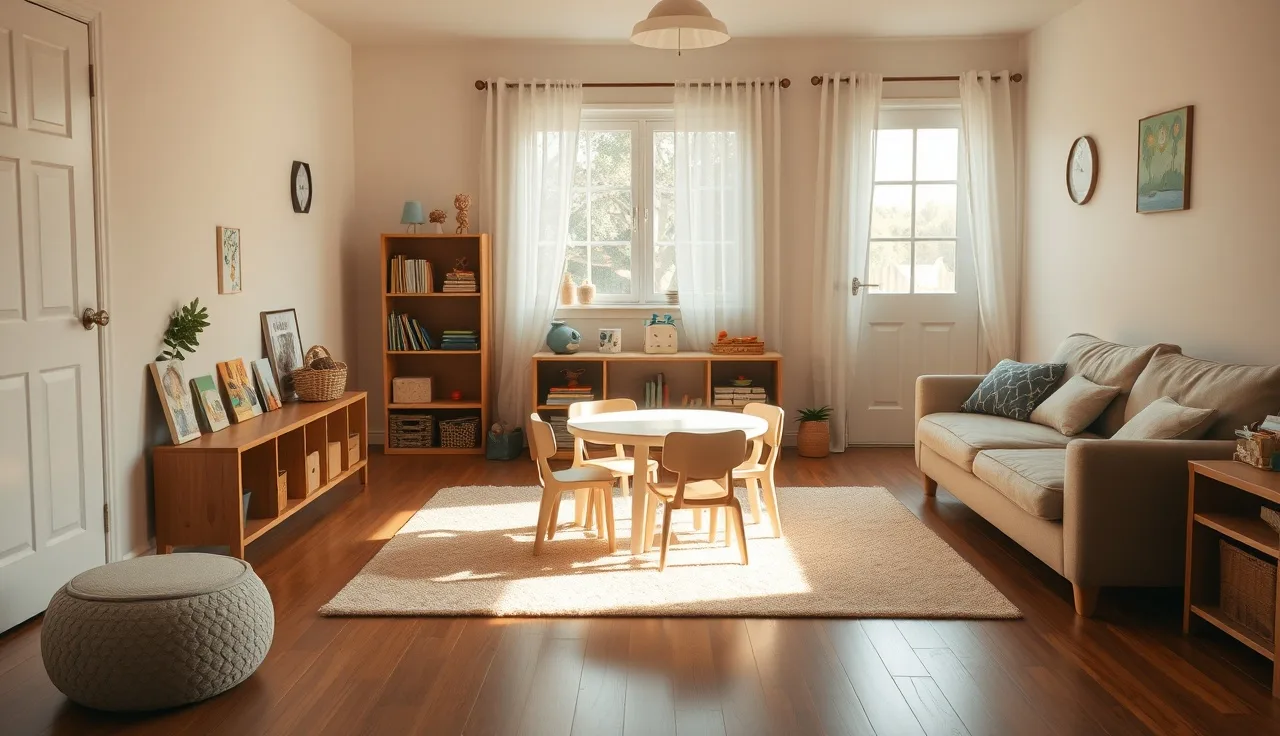
TL;DR
A family daycare home is a licensed residence caring for roughly 6 to 8 children with one provider. A group family daycare home serves up to 12 to 14 children and requires at least two adults. Your license type sets your ratios, square footage, staffing rules, and startup costs. Most states require separate applications, inspections, and training hours for each type.
What is the difference between a family daycare home and a group daycare home?
The short answer: size and staffing.
A family daycare home, sometimes called a family child care home, is a private residence where one primary provider, often with one assistant, cares for a small group of children. Most states cap the total at 6 to 8 children, though the exact ceiling varies a lot by state. [1] The provider usually lives in the home and runs the program alone or with a single helper.
A group family daycare home (called a large family child care home in some states) sits between a family home and a licensed center. It serves more children, generally 9 to 14 depending on your state, and almost always requires at least two qualified adults present whenever children are in care. [1] The building may or may not be the provider's personal residence, though many still operate from a home setting.
The terminology is not standardized nationally. Texas uses "registered child care home" and "listed family home." California uses "family child care home" with two tiers: small (up to 8 children) and large (up to 14 children). [2] New York has "family day care" and "group family day care." Check what your state actually calls these license types before you start the paperwork. Mixing up the application can cost you weeks.
Here is the difference that shows up in your bank account: a family home is a solo operation with modest overhead, and a group home is a small team operation with higher revenue and higher fixed costs. Both are home-based, both are regulated at the state level, and both fall under the federal Child Care and Development Fund subsidy rules. [3]
What are the typical capacity and ratio rules for each license type?
Family homes usually top out at 6 to 8 children with one provider. Group homes run 9 to 14 with two adults required. Both carry separate infant sub-caps that limit how many babies you can take inside that total. Verify your own state's numbers before you rely on any figure here.
| License Type | Typical Max Children | Typical Staff Required | Common Infant/Toddler Sub-Cap |
|---|---|---|---|
| Family daycare home (small) | 6 to 8 | 1 provider (+ 1 optional assistant) | 2 to 3 infants within total cap |
| Group family daycare home (large) | 9 to 14 | 2 qualified adults required | 3 to 4 infants within total cap |
| Licensed child care center | 13+ (no cap, ratio-based) | Director + teachers by ratio | Varies by room |
California's law is a useful benchmark because it comes up often in policy debates. Under California Health and Safety Code Section 1597.44, a small family child care home may serve up to 8 children, and a large family child care home may serve up to 14, provided a second adult is present when more than 8 children are in care. [2]
Infant sub-caps matter more than most first-time providers expect. Even if your license allows 8 children total, many states restrict how many can be infants or toddlers under 24 months, because infant care eats up more hands-on time. In Michigan, family child care providers caring for one or two infants under 12 months must reduce their total capacity accordingly. Check your state's infant sub-cap before you book your first enrollment.
Your own kids count too, usually if they're under 6. School-age children of the provider may count differently or be exempt during school hours. This is one of the most common compliance mistakes new home providers make, so get the rule in writing from your licensor before you fill your enrollment slots.
What are the startup costs for a family daycare home versus a group daycare home?
Both cost far less than opening a center. A group home costs meaningfully more than a family home, mostly because of the second provider and the heavier facility work.
Child Care Aware of America's annual report puts the average cost of home-based child care between roughly $5,800 and $15,000 per child per year depending on the state and age of the child, but those are parent-side prices. [4] On your side, startup costs hinge on whether you already have a suitable home, what physical upgrades your state requires, and how many children you plan to serve.
A family daycare home usually costs $3,000 to $10,000 to open. That covers licensing fees (often $25 to $150 for a home license), first aid and CPR training, background checks (typically $30 to $75 per adult in the home), basic liability insurance, childproofing supplies, and required furniture or equipment. [5] Your biggest wildcard is physical plant. If your home needs a second exit, a fence, or a new smoke detector setup to pass inspection, costs climb fast.
A group family daycare home adds a second provider's background check and training, a higher insurance premium for the larger group, and often heavier facility work. Some states hold group homes to fire safety standards that look more like center rules than family home rules. Budget $8,000 to $20,000 for a group home startup from scratch. Providers who convert an existing family license to a group license often pay less, because the home already passed inspection.
Good home daycare insurance is non-negotiable at both levels. A standard homeowner's policy almost never covers commercial child care, and the coverage gap can wipe you out if a child is injured. Separate daycare liability insurance runs $400 to $1,200 per year for a family home and somewhat more for a group home. [5]
What are the licensing steps to open a family daycare home?
The process is roughly the same across states, though the sequence and timeline vary. Plan for 60 to 120 days from application to your first licensed day. Some states move faster; a handful take longer.
Step 1: Confirm your zoning allows home child care. Call your city or county planning department. Most residential zones permit family daycare as a matter of right, but some HOAs restrict it, and group homes draw more scrutiny because of the extra traffic and staffing. [6]
Step 2: Complete pre-licensing training. Most states require a set number of orientation hours before they'll take your application, often 3 to 16 hours covering health, safety, and child development basics. Some states require a full Child Development Associate (CDA) credential or college coursework for group home providers but accept less for family home providers.
Step 3: Submit your application and pay the fee. You'll typically need proof of training, a list of all adults living in the home, background check consent forms for every adult, and basic information about your program.
Step 4: Clear background checks. Every adult in the household, not only the provider, must usually pass a criminal history check and often a child abuse and neglect registry check. The Child Care and Development Block Grant Act of 2014 requires states to check the national sex offender registry as a condition of receiving CCDF funds. [3]
Step 5: Pass a home inspection. The licensor checks fire safety, water safety, outdoor play space, toilet facilities, and sleeping arrangements. Square footage rules differ by state; a common benchmark is 35 square feet of indoor play space per child, but this varies. Have your first aid kit stocked, your smoke detectors tested, and your medications locked before the inspector shows up.
Step 6: Receive your license and set your enrollment limit. Your license spells out the maximum number of children and the age ranges you're approved to serve. Post it where parents can see it. Operating over capacity is a serious violation that can cost you the license.
What additional steps are required to open a group family daycare home?
Everything in the family home process applies, plus several more requirements.
Second provider qualification. Most states require the second adult to meet minimum training or credential requirements, not simply pass a background check. In some states, both adults must hold a CDA or equivalent. In others, the second provider needs only first aid certification and a clean background. Know your state's rule before you hire.
Higher training hours. Group home applicants in many states complete 20 to 40 pre-service training hours, compared with 6 to 16 for family home applicants. Continuing education requirements are often higher too.
More rigorous facility inspection. Fire safety rules for group homes often mirror small center rules: fire extinguishers, evacuation plans posted in multiple locations, and sometimes sprinkler systems depending on the number of children and your state's fire code. Talk to your local fire marshal before you apply, not after.
Separate business structure. A group home means at least two workers and more revenue, so it's worth asking an accountant whether an LLC or S-Corp makes sense before you open. This is a business decision, not a licensing requirement, but providers who skip it often regret it.
Higher insurance limits. Some states set a minimum liability amount for group homes above what family homes carry. A $300,000 per-occurrence policy is common for family homes; group homes may need $500,000 or more. Confirm the number with your licensor and your insurance broker before you sign a policy.
How do income and revenue potential compare between the two license types?
More children means more revenue and more costs. The math is less obvious than it looks.
A family daycare home with 6 full-time children at the national median weekly rate of roughly $200 per child (rates swing wildly by region) brings in about $1,200 per week, or roughly $60,000 a year before expenses. [4] After food, supplies, insurance, and any assistant wages, a solo family home provider often nets between $25,000 and $45,000 a year, depending on location and subsidy mix.
A group family daycare home with 12 full-time children at the same rate grosses $2,400 per week, about $120,000 a year. But you're paying at least one other adult, carrying more insurance, and spending more on food and supplies. Net income for a group home provider often runs $35,000 to $65,000, with the second provider earning separately.
The real revenue lever is infant care. Infants command higher weekly rates, often $250 to $350 per week in urban markets, because the staffing ratio is tighter. A family home with 3 infant slots can out-earn a group home full of school-age kids.
Subsidy access cuts both ways. Providers who accept CCDF-funded subsidy vouchers reach a larger pool of families, but reimbursement rates often sit below market. Child Care Aware reports that in most states, subsidy rates are set at or below the 75th percentile of market rates, which means providers who serve only subsidy children frequently run those slots at a loss. [4] Model your private-pay and subsidy mix before you set an enrollment target.
For a fuller look at what parents actually pay near you, the daycare cost breakdown by state is a useful reference point.
What are the physical space requirements for each license type?
Your home has to pass a licensing inspection before you enroll a single child. Space rules differ between family and group homes, and again by state.
Indoor square footage is the most common threshold. The National Association for Regulatory Administration (NARA) tracks state requirements, and the most common standard is 35 square feet of usable indoor play space per child, excluding bathrooms, kitchens, hallways, and sleeping areas. [7] At that standard, a family home licensed for 8 children needs 280 square feet of dedicated play space. A group home licensed for 14 needs 490 square feet. That's a big footprint, and plenty of providers are surprised to find their living room alone doesn't clear it.
Outdoor space rules vary more. Some states require a fenced outdoor play area; others allow use of a nearby park with written policies on file. Group homes are more likely to face a mandatory outdoor space requirement than family homes.
Bathroom access is regulated too. The standard is usually one toilet per 10 to 15 children, with separate adult facilities required in some states. Diaper changing areas must be separate from food preparation areas, with a non-porous surface you can sanitize between changes.
Sleeping accommodations matter if you offer full-day or overnight care. Safe sleep rules for infants apply in nearly every state's licensing code, aligned with American Academy of Pediatrics guidance that infants sleep on their backs on firm, flat surfaces without loose bedding. [8] Each infant needs an individual sleep surface. Portable cribs or pack-n-plays are usually fine if they meet current CPSC safety standards.
Good daily daycare cleaning routines aren't just tidy habits; they're part of what inspectors check on annual compliance visits. Sanitizing food contact surfaces, diaper changing areas, and toys is often spelled out in state rules with specific product concentration requirements.
How do background check and training requirements differ between the two license types?
Federal law sets a floor. States build on top of it.
The Child Care and Development Block Grant Act of 2014 requires every state that receives CCDF funds to run criminal history background checks, including fingerprint-based FBI checks, for all licensed providers and their employees. [3] States must also check the state child abuse and neglect registry and the national sex offender public website. These apply to both family and group home providers.
Above that federal floor, states vary a lot. Family home providers in many states need 6 to 16 hours of pre-service training covering health, safety, nutrition, child development, and business practices. Annual continuing education usually runs 12 to 24 hours a year.
Group home providers face more. Pre-service requirements often reach 30 to 40 hours, and some states require a formal credential for the lead provider. A Child Development Associate (CDA) credential, issued by the Council for Professional Recognition, takes 120 hours of professional education plus a year of experience working with children. [9] Some states accept the CDA as the qualifying credential for group home lead providers.
Every adult living in the household, not only the licensed provider, must typically pass a background check. This catches first-time applicants off guard, especially when a spouse, parent, or adult child in the home has any prior record.
First aid and CPR certification is required in every state for at least the primary provider, and most states now require it for all adults with unsupervised access to children. Keep your certifications current. An expired CPR card is a compliance violation.
Can you convert a family daycare home license to a group daycare home license?
Yes, most states let you upgrade, and plenty of providers do exactly this once they've built a steady client base.
The conversion is not a simple paperwork swap. You'll typically submit a new application (or an amendment, depending on your state), pass an updated facility inspection confirming you have room for the higher capacity, document that your second provider meets qualifications, and possibly complete extra training hours.
Timing matters. Some states require the second provider to be on-site and credentialed before they'll even schedule the group home inspection. Others allow a provisional group home license while the second provider finishes training. Ask your licensor exactly what's required before you add the second adult to your payroll.
Here's the usual reason providers upgrade: they already have a waiting list. If you keep turning families away at your 6-child cap, the revenue case for a group home license writes itself. The upgrade usually takes 30 to 90 days from application to approval if the space is already compliant.
Here's the usual reason they don't: the second adult. Finding, hiring, and keeping a qualified co-provider is the hardest part of running a group home. That person has to be reliable, background-cleared, trained, and willing to work the same hours the children are in care. Many solo providers decide the management headache isn't worth the extra capacity.
What federal rules apply to both types of home daycare?
Home-based child care sits where federal child care policy meets state licensing law.
The Child Care and Development Fund (CCDF), run by the Office of Child Care inside the U.S. Department of Health and Human Services, is the main federal funding stream for child care assistance. [3] States receive CCDF block grant funds and set their own rules for how providers qualify to accept subsidy vouchers. Licensed family homes and licensed group homes are both usually eligible to take part, though some states tier their reimbursement rates, paying more to group homes or accredited programs.
The Child and Adult Care Food Program (CACFP), run by USDA, reimburses licensed home providers for meals and snacks served to children from low-income families. [10] Family daycare homes and group daycare homes both qualify. As of October 2024, the reimbursement rates are $0.47 per snack, $1.63 per breakfast, and $3.04 per lunch for the contiguous United States (rates adjust annually). CACFP can add $3,000 to $8,000 a year to a family home operation. That's real money, worth the recordkeeping.
The IRS treats home daycare businesses differently from other home businesses. The business-use portion of your home expenses, including utilities, mortgage interest, and depreciation, may be deductible under the Day Care Facility rules in IRS Publication 587. [11] This applies to both family and group home providers who use part of their home exclusively or regularly for day care. The calculation is more generous than the standard home office deduction because it accounts for shared-use space during the hours children are in care.
ChildCareComp's compliance toolkit includes checklists organized by license type, so you can track which federal and state requirements hit your specific situation.
What are the most common reasons home daycare applications get denied or delayed?
Most denials are avoidable. The recurring culprits are incomplete paperwork, facility violations found at inspection, and background check issues.
Incomplete applications delay more people than anything else. Missing one household member's background check consent form, forgetting to attach proof of training, or submitting an outdated application version can push your timeline back 30 to 60 days while you gather and resubmit. Ask your licensor for a pre-application checklist and work through it twice before you mail anything.
Facility violations at inspection fall into a predictable set: unsecured medications or cleaning products, weak outdoor fencing, dead smoke detectors, or too little square footage. Walk your home with the licensing standards document in hand before the inspector arrives. Many states publish the exact inspection checklist; use it.
Background check results with any prior charge, even a dismissed one, can trigger an automatic hold or denial depending on the offense type and your state's look-back period. Federal law bars licensing providers with certain felony convictions (crimes involving children, violence, or drug trafficking) within the past 5 years. [3] Some states use longer look-back periods. If you have any prior record, talk to your licensor before you apply so you know what's reviewable and what's disqualifying.
Training deficiencies hit group home applicants harder, since they face higher pre-service hour requirements. Don't start the application until all required training is finished and documented.
Provider fraud is a separate but serious problem that state agencies watch closely, especially in subsidy programs. Inflating attendance records to collect larger CCDF reimbursements is a federal crime. [12] The consequences (repayment demands, license revocation, criminal charges) are severe and well documented.
How do you choose between a family home license and a group home license for your situation?
This is mostly a financial and lifestyle decision, with compliance rules as the guardrails.
If you want a low-overhead operation where you're the only adult working, you value flexibility, and you have a home that comfortably serves 6 to 8 children, a family home license fits. Lower startup costs, simpler management, more autonomy. The trade-off is a revenue ceiling.
If you want a business with real income potential, you have room for 10 to 14 children, and you can find and keep a reliable second provider, a group home license makes sense. The management complexity is real, but the revenue potential is roughly double a family home's, and many providers find a second adult makes the day easier to run.
A few questions worth sitting with: Do you have a second adult you trust who meets the qualifications? Does your home have enough square footage to serve the higher capacity without feeling packed? Can you cover the higher startup costs and insurance premiums before tuition starts flowing? Is there demand in your market for more than 8 slots?
Providers who want to offer part time daycare slots to fill schedule gaps usually find a family home license is all they need. The flexibility of a small operation is genuinely hard to replicate once you're managing staff and a bigger group.
Whatever you pick, the path for most successful home providers looks the same: start with the family home license, learn the business, build enrollment and reputation, then upgrade to a group home or eventually a center if growth keeps coming. There's no shame in starting small. A full family home is a profitable business.
Frequently asked questions
How many children can a family daycare home have?
Most states cap family daycare homes at 6 to 8 children total, including the provider's own young children below the age threshold (often 6 years old). The exact number varies by state, and some states set lower sub-caps for infants. Verify your specific state's rule with your licensor before setting enrollment targets, because exceeding capacity is a serious license violation.
Do I need a license to run a family daycare home from my house?
In most states, yes. Operating without a license is illegal if you exceed the state's exemption threshold, usually 1 to 3 children not related to you. Some states exempt very small operations, but even exempt providers must follow safe sleep and health rules. Check your state's child care licensing office for the exact exemption criteria before you assume you don't need a license.
How long does it take to get a family daycare home license?
Plan for 60 to 120 days from submitting your application to receiving your license in most states. The timeline depends on how fast background checks clear, how soon an inspector can schedule your home visit, and whether your application is complete on first submission. Incomplete applications cause the most delays. Some states offer provisional licenses while background checks process.
What is the difference between a registered and a licensed family daycare home?
Some states use a two-tier system: "listed" or "registered" homes face fewer requirements and inspections, while "licensed" homes meet higher standards and can take more children. Registered homes are often exempt from full licensing if they serve only a small number of children. A licensed family home has passed a full facility inspection and background check process. Not all states use both tiers; some have only one category.
Can I run a group family daycare home by myself?
No. A group family daycare home, by definition in nearly every state, requires at least two qualified adults present whenever children are in care. It's a hard requirement tied to the higher capacity, not a suggestion. If you want to work as the sole provider, you need a family home license with the lower cap. There is no variance to waive the second-adult rule for group homes.
Do children of the provider count toward the daycare home capacity?
Usually yes, for young children. Most states count the provider's own children under a certain age (commonly 6) toward the total capacity. School-age children of the provider may be excluded during school hours or counted differently. This surprises many first-time providers who planned to care for their own toddler while running a full group of licensed children. Confirm the exact rule with your licensor.
What insurance does a family daycare home need?
At minimum, a liability policy built for home child care. Your standard homeowner's or renter's policy almost certainly excludes commercial child care activity. A dedicated home daycare liability policy typically costs $400 to $1,200 per year and covers bodily injury and property damage claims. Some states require a minimum coverage amount as a condition of licensure. A group home may require higher limits, often $500,000 per occurrence or more.
What is the CACFP and do home daycare providers qualify?
The Child and Adult Care Food Program (CACFP), run by USDA, reimburses licensed home daycare providers for meals and snacks served to children from low-income families. Both family and group home providers qualify. Participating can add $3,000 to $8,000 a year in reimbursements to a family home. Providers apply through a CACFP sponsoring organization in their state, which also handles required nutrition training and monitoring.
Can I accept child care subsidy vouchers as a home daycare provider?
Yes, if you're licensed and your state's CCDF program allows home-based provider participation. Most states let both family and group home licensed providers accept subsidy vouchers from families who qualify. Reimbursement rates are set by the state and often sit below the market private-pay rate, so plan your financial model with both private-pay and subsidy scenarios before you commit to a heavy subsidy caseload.
What training do I need before I can open a home daycare?
Most states require 6 to 16 hours of pre-service training for family home providers, covering health, safety, nutrition, and child development. Group home providers often face more, sometimes 20 to 40 hours, plus credential requirements for the lead provider. First aid and CPR certification is required in nearly every state. Check your state licensing agency's provider handbook for the exact hours and approved training sources.
What are the safe sleep rules for home daycare providers?
Every state's licensing rules now build in safe sleep requirements aligned with American Academy of Pediatrics guidance: infants sleep on their backs, on a firm and flat surface, without loose bedding, pillows, or positioners. Each infant needs a separate sleep surface. Soft or worn-out mattresses and padded crib bumpers are prohibited. Inspectors check for safe sleep compliance, and violations can bring citations or license action.
How does a group family daycare home differ from a licensed child care center?
A group family daycare home typically serves 9 to 14 children in or near a residential setting with 2 adults. A licensed child care center serves 13 or more children in a dedicated commercial or institutional facility, with staffing organized by classroom ratios, a director, and often credentialed teachers. Centers face tougher physical plant requirements, fire and building code inspections, and usually higher director qualification standards than group homes.
Can I upgrade from a family daycare license to a group daycare home license?
Yes. Most states let providers apply for an upgraded license after meeting the group home requirements: more space, a second qualified adult, higher training hours, and passing a new facility inspection. The process usually takes 30 to 90 days. You must have the second provider qualified and available before the upgrade is approved. Ask your licensor whether you need a new application or an amendment to your existing license.
Are there federal background check requirements for home daycare providers?
Yes. The Child Care and Development Block Grant Act of 2014 requires states receiving CCDF funds to run fingerprint-based FBI background checks, state criminal history checks, child abuse and neglect registry checks, and a national sex offender registry check for all licensed providers and household members with unsupervised access to children. These apply to both family and group home providers and to every adult living in the household, not only the operator.
Sources
- National Association for Regulatory Administration (NARA), Child Care Licensing Study: Family daycare homes typically cap at 6 to 8 children; group family daycare homes typically serve 9 to 14 children with at least two adults required.
- California Legislative Information, Health and Safety Code Section 1597.44: California limits small family child care homes to 8 children and large family child care homes to 14 children, with a second adult required when more than 8 children are present.
- U.S. Department of Health and Human Services, Office of Child Care, CCDBG Act of 2014: The Child Care and Development Block Grant Act of 2014 requires fingerprint-based FBI checks, state criminal history checks, child abuse registry checks, and national sex offender registry checks for all licensed child care providers as a condition of receiving CCDF funds.
- Child Care Aware of America, Demanding Change: Repairing Our Child Care System (2022): Annual cost of home-based child care ranges from roughly $5,800 to $15,000 per child per year depending on state; subsidy reimbursement rates are set at or below the 75th percentile of market rates in most states.
- National Association for Family Child Care (NAFCC), Provider Business Resources: Home daycare liability insurance typically costs $400 to $1,200 per year for a family home; standard homeowner's policies generally exclude commercial child care activity.
- U.S. Department of Housing and Urban Development, Fair Housing and Child Care: Most residential zones permit family daycare as a matter of right, though local HOA rules may restrict home-based child care operations.
- National Association for Regulatory Administration (NARA), Licensing Curriculum for Regulatory Specialists: The most common indoor space standard is 35 square feet of usable indoor play space per child, excluding bathrooms, kitchens, hallways, and sleeping areas.
- American Academy of Pediatrics, Safe Sleep Guidelines: Infants must sleep on their backs on a firm, flat surface without loose bedding, pillows, or positioners; each infant requires a separate sleep surface.
- Council for Professional Recognition, Child Development Associate (CDA) Credential: The CDA credential requires 120 hours of professional education plus one year of experience working with children and is accepted by many states as the qualifying credential for group home lead providers.
- USDA Food and Nutrition Service, Child and Adult Care Food Program (CACFP): CACFP reimburses licensed home daycare providers for meals and snacks; as of October 2024 rates include $0.47 per snack, $1.63 per breakfast, and $3.04 per lunch for the contiguous United States.
- IRS Publication 587, Business Use of Your Home (including use by daycare providers): Home daycare providers may deduct the business-use portion of home expenses using the Day Care Facility rules, which account for shared-use space during hours children are in care.
- U.S. Department of Justice, Child Care Subsidy Fraud Enforcement: Inflating attendance records to collect larger CCDF reimbursements constitutes federal fraud and can result in repayment demands, license revocation, and criminal prosecution.