Last updated 2026-07-09
TL;DR
California's Community Care Licensing Division (CCLD) inspects Family Day Care Homes using Title 22 regulations. Inspectors check supervision ratios, safe sleep, medications, outdoor space, food safety, fire exits, and provider records. Small homes (up to 8 children) and large homes (up to 14 children) share most requirements but differ on capacity, staffing, and space minimums. Expect an unannounced visit at least once a year.
Who inspects California home daycares and how often?
California's Community Care Licensing Division (CCLD), housed inside the Department of Social Services, licenses and inspects every Family Day Care Home in the state. Field staff are called Licensing Program Analysts (LPAs). They are not county employees, and they do not work for your fire department or health department, though those agencies run their own separate visits.
CCLD conducts at least one unannounced inspection per year for every licensed home. [1] Homes with a lot of complaints or a history of violations get visited more often. New applicants also receive a pre-licensing inspection before any license is issued, and that one visit is scheduled. After you open, assume every knock on the door could be an LPA.
Complaints trigger a separate investigation visit, typically within 10 days for non-urgent issues and within 24 hours for allegations of immediate risk to children. [1] California law requires CCLD to post inspection results publicly, so your record shows up when parents search the CCLD online portal.
One thing new providers get wrong: they think passing the pre-licensing inspection sets them up for a year. It does not. LPAs can show up any time children are likely to be present.
What are the two types of California Family Day Care Home licenses?
California splits home daycare into two license categories, and the difference between them shapes how you prep for inspection.
| License Type | Children Allowed | Infants Allowed | Assistant Required |
|---|---|---|---|
| Small Family Day Care Home | Up to 8 total | Up to 2 infants under 2 | No (provider alone) |
| Large Family Day Care Home | Up to 14 total | Up to 3 infants under 2 | Yes, at least 1 assistant |
Infant counts are strict. An "infant" under Title 22 is any child under 24 months. [2] If you hold a Small license and a third parent wants to enroll a 10-month-old, you cannot take that child until you upgrade to a Large license and meet its added requirements.
Large Family Day Care Homes draw extra scrutiny around the assistant's qualifications and criminal clearance, the added square footage, and whether a second adult is physically present the entire time children are in care. [2]
Your license certificate has to be posted where parents can see it. LPAs check this every visit.
What does a California home daycare inspection checklist actually look like?
CCLD does not publish a single consumer-facing PDF checklist the way some states do. Title 22, Division 12, Chapter 3 (Sections 102365 through 102416) lays out every requirement LPAs use. [2] The inspection covers roughly 12 categories. Here is how to think about each one.
1. Licensing paperwork and records Your license must be posted. Each child needs a signed Licensee-Parent Agreement (LIC 9221), a completed Health History (LIC 702), and current emergency contact information on file. [3] Immunization records for every enrolled child must be current and match the California school entry schedule. Adults in the home who are not licensees must have their criminal history clearance (TrustLine or DOJ/FBI) documented.
2. Provider and assistant qualifications Small home providers need at least 12 semester units of early childhood education (ECE) or child development coursework, or an experience-plus-coursework equivalency. [2] Large home providers need a Child Development Associate Teacher Permit or equivalent. CPR and pediatric first aid certification must be current, and LPAs check the expiration dates.
3. Supervision and ratios Children must stay within sight and sound of the provider at all times. [2] This is the rule that generates the most citations. Leaving 6 toddlers in the backyard while you take a phone call in the kitchen is a violation, fenced yard or not. Nap time does not exempt you.
4. Safe sleep Every infant sleeps on a firm, flat surface in an approved crib, bassinet, or play yard. [4] No soft bedding, positioners, bumpers, or inclined sleepers. The sleep area has to be free of toys, blankets, and pillows. LPAs look at every sleep surface, including portable cribs. If your Pack 'n Play has a soft insert, pull it before your inspection.
5. Medications All prescription and over-the-counter medications must be in locked storage, labeled with the child's name, and paired with a signed parental authorization form. [3] A first aid kit must be reachable by adults but not by children. LPAs open the medicine cabinet.
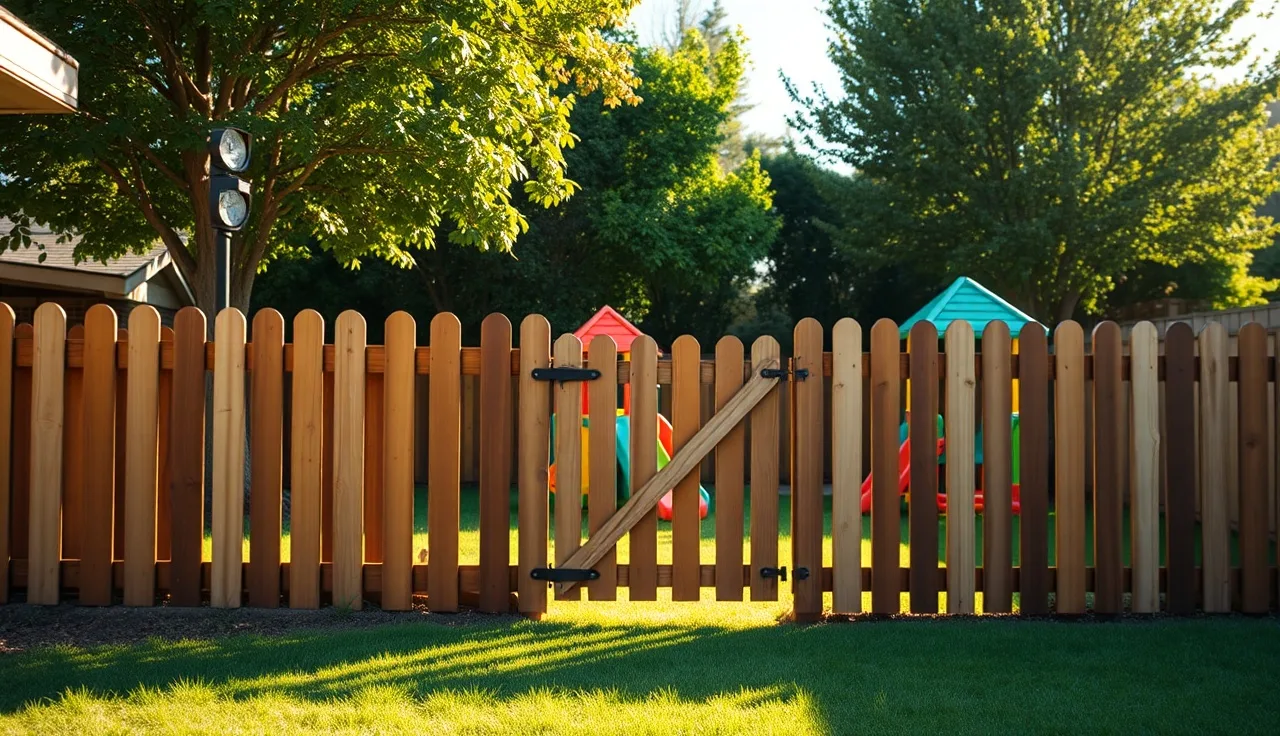
6. Outdoor space California requires at least 75 square feet of outdoor play space per child for the children using it at any one time. [2] The yard must be fenced to a minimum of 4 feet, higher for pools. Swimming pools, hot tubs, and decorative ponds need a separate fence meeting specific height and self-latching rules. LPAs walk the yard and measure if something looks borderline.
7. Indoor space Minimum indoor space is 35 square feet per child in the care area. [2] Bedrooms can be used for rest only, not active play during licensed hours, unless they hit the square footage requirement.
8. Fire safety and exits Smoke alarms in every room used for child care and in hallways leading to sleeping areas. Carbon monoxide detectors if you have gas appliances or an attached garage. [5] Two exits minimum from every room children occupy. A fire extinguisher (minimum 2A:10BC rating) in the kitchen. An evacuation plan posted where children can see it. LPAs press the test button on smoke alarms.
9. Firearms and weapons All firearms stored unloaded in a locked container. Ammunition stored separately and locked. [2] This is not optional, and LPAs ask directly.
10. Food and nutrition If you serve meals, menus must be posted and available to parents. Food must be stored safely, and any food from home must carry the child's name. [3] Infant formula and breast milk handling have their own rules. Refrigerator temperatures must sit at or below 40°F.
11. Pets and animals Pets must be vaccinated, and the documentation must be available. Animals must be separated from children if there is any risk of harm. [2] LPAs note whether the dog has access to the child care area.
12. Health and sanitation Soap and paper towels (or disposable) at every sink children use. A hand-washing procedure posted at every sink. Diaper changing surfaces must be non-porous and sanitized after each use. [3] Toys and surfaces in infant areas get sanitized daily. A solid daycare cleaning routine is your best friend here.
For a state-by-state comparison, California's outdoor space requirement (75 sq ft per child) runs more generous than Indiana's (60 sq ft) and matches Kansas (75 sq ft per child for group homes), though each state's full regulatory picture differs a lot. [6][7]
What violations get cited most often in California Family Day Care Homes?
CCLD publishes inspection data and deficiency records through its public licensing portal. The citations that show up most in family child care homes cluster around a short list, split between Type A (immediate risk) and Type B (non-immediate risk).
Supervision failures top the list year after year. Any situation where children are left without adult oversight counts, even briefly. An LPA who arrives and finds children alone in a yard while a provider answers the door has grounds to cite.
Immunization record gaps come second. California's immunization rules are among the strictest in the country, and a single missing or outdated record is a citable violation. [8] The state killed the personal belief exemption in 2016 (SB 277), so there is no paperwork workaround.
Safe sleep violations, mostly soft bedding in infant cribs, get cited often. The AAP updated its safe sleep guidance in 2022, and CCLD holds homes to those standards. [4]
Uncleared adults in the home, meaning someone who lives there or is regularly present without a completed DOJ/FBI clearance, is a serious violation that can trigger a license suspension.
Expired CPR and first aid certification shows up more than you would guess. Set a calendar reminder 60 days before your certification lapses.
How do you prepare for a California home daycare pre-licensing inspection?
The pre-licensing inspection is your one scheduled visit. Use that advantage.
Start with paperwork. Every form CCLD requires is on the CCLD website. [3] Download the Family Day Care Home application packet and complete every form before your scheduled visit. The LIC 100 (Application), LIC 701 (Administrative Organization), LIC 9221 (Licensee-Parent Agreement), and LIC 503C (Personnel Record) are the core documents. Have originals and a copy.
Do a physical walk-through with Title 22 as your guide. Measure your indoor and outdoor space. A tape measure costs $8 and kills the guesswork. Check every outlet for covers. Check every cabinet under sinks and in bathrooms for childproofing. Pull anything that could be a hazard: cleaning supplies at child height, loose cords, unlocked medicine cabinets.
Test every smoke alarm. Replace batteries even if you think they are fine. Have your fire extinguisher inspected if it is more than a year old or was bought used.
Have your health clearance, TB test results, and CPR card sitting on the table when the LPA arrives. Do not make the inspector ask.
If you have a pool or spa, the barrier inspection is often the single biggest pre-licensing failure point. California Health and Safety Code Section 115922 sets the pool barrier requirements that CCLD enforces for licensed care homes. [5] Verify your fence height, latch mechanism, and gate self-closure before the visit.
A structured compliance toolkit like the one at ChildCareComp can help you organize this paperwork by category so nothing slips through.
What happens after an inspection, and how do you respond to a citation?
If an LPA finds a violation, they issue a Notice of Action or a Statement of Deficiencies. The document spells out whether each violation is Type A (immediate health or safety risk) or Type B (less immediate).
Type A violations require immediate correction. The LPA can require you to stop operating until the issue is fixed. Type B violations come with a correction timeline, usually 30 days, though complex ones may get longer. [1]
You must submit a Plan of Correction for each cited deficiency. The plan describes what you did, when you did it, and how you will keep it from happening again. Be specific. "I will be more careful" is not a plan. "I installed a self-latching mechanism on the pool gate and photographed it on [date]" is a plan.
Repeat violations inside a 12-month window can escalate to a civil penalty or a license revocation proceeding. California's civil penalty schedule for family child care homes starts at $150 for a first offense and climbs for repeat violations. [1]
You have the right to appeal any citation. The appeal goes through the CCLD Appeals Unit. If you think an LPA misread the regulation, request the specific regulation section in writing and respond point by point in your Plan of Correction.
Protect yourself financially. A license revocation is also a business interruption event. Make sure your home daycare insurance covers regulatory defense costs, and verify that your daycare liability insurance is current before every inspection cycle.
What square footage and space requirements does California require for home daycares?
California Title 22 sets two space standards that LPAs measure directly.
Indoor space: 35 square feet per child in the areas used for child care activities. [2] Hallways, bathrooms, and kitchens usually do not count. If your living room is 350 square feet and it is the only care area, you have room for 10 children on space alone, though your license type caps you below that.
Outdoor space: 75 square feet per child for the kids using the outdoor area at the same time. [2] If all 8 children in a Small license home go outside at once, you need 600 square feet of usable outdoor space. Driveways, pools, and landscaping beds generally do not count toward that total.
These numbers matter most at or near capacity. Plenty of providers find that outdoor space, not indoor space, is the real limiting factor on enrollment.
If your home is genuinely undersized for the capacity you want, there is no waiver process for space requirements. You either remodel, cut enrollment, or rethink the license type.
How does California's safe sleep inspection differ from federal CCDF requirements?
The federal Child Care and Development Fund (CCDF) requires every state that takes CCDF subsidies to have health and safety standards for licensed child care, including safe sleep. [9] California meets that requirement through Title 22, and CCLD inspects for it during the standard visit.
California's safe sleep rules require infants to be placed on their backs, on a firm flat surface, in a crib, bassinet, or play yard that meets current CPSC safety standards. [4] Inclined sleepers, including the Fisher-Price Rock 'n Play and similar products recalled since 2019, are prohibited. Swings and bouncers are not approved sleep surfaces.
Federal CCDF guidance also says providers cannot contradict a parent's written instructions on infant sleep positioning, with a narrow exception for a signed medical order from a physician. [9] California Title 22 follows the same logic. If a parent hands you a note reading "put my baby on her tummy," you need a countersigning physician order before you can honor it.
According to the AAP's 2022 safe sleep guidelines, "sleep-related infant deaths account for approximately 3,500 deaths in the US each year." [4] That number is exactly why LPAs treat safe sleep violations as serious, and so should you.
What immunization records does California require home daycare providers to keep?
California requires every child enrolled in a licensed Family Day Care Home to meet the state's immunization schedule before enrollment, with no personal belief exemptions. [8] The California Department of Public Health (CDPH) maintains the current schedule.
The required vaccines for child care entry include DTaP, Polio, MMR, Hib, Hepatitis B, Varicella, and PCV (pneumococcal). Specific doses and age requirements follow the ACIP schedule CDPH adopts. [8]
Providers must collect and keep a copy of each child's immunization record. "I asked the parent and they said the child is vaccinated" does not cut it. The actual record, either the yellow shot card or a printout from a physician, has to be in the child's file.
Medical exemptions are allowed, but they require a written statement from a licensed physician. The physician must submit it through California's CAIR-ME system under SB 276 (2019). [8] A parent-written note does not qualify.
LPAs pull child files and cross-check immunization records against the schedule. A single gap, even one overdue dose, is a citation. Update records every time a child gets a new vaccine.
How do California home daycare inspection requirements compare to Indiana and Kansas?
Providers moving between states, or eyeing another state's model, often ask how California stacks up. Here is an honest comparison across the categories that matter most.
| Requirement | California | Indiana | Kansas |
|---|---|---|---|
| Outdoor space per child | 75 sq ft | 60 sq ft | 75 sq ft (group) |
| Indoor space per child | 35 sq ft | 35 sq ft | 35 sq ft |
| Infant safe sleep standard | Title 22, back to sleep, firm surface | 470 IAC 3-4.7 | KAR 28-4-113 |
| Immunization requirement | Required, no personal belief exemption | Required, exemptions allowed | Required, exemptions allowed |
| Inspection frequency | At least annually, unannounced | At least annually, unannounced | At least annually, unannounced |
| Max children, small home | 8 | 6 | 10 |
| CPR/First Aid required | Yes, current | Yes, current | Yes, current |
Sources: [2][6][7]
California's immunization stance is clearly stricter than Indiana's or Kansas's. Its maximum capacity for a Small Family Day Care Home (8 children) sits between Indiana's 6 and Kansas's 10. Home daycare inspection checklist indiana and home daycare inspection checklist kansas questions come up a lot from providers who moved from those states and assume California's rules match. They do not, especially on immunizations.
The shared thread across all three states: CCDF sets a federal floor and each state builds on top of it. [9] The inspection categories look similar. The thresholds and exemptions do not.
What does a complete home daycare compliance file look like?
Think of your compliance file as two parts: the facility file and individual child files. LPAs look at both.
Facility file (keep at the care site at all times)
- Current license certificate (posted and in file)
- Provider's DOJ/FBI criminal clearance
- Any additional adult's TrustLine clearance
- Current CPR and first aid certificates for all adults
- TB test results (negative) for provider and any resident adults
- ECE transcripts or Child Development Permit
- Emergency evacuation plan (posted and in file)
- Fire extinguisher inspection tag
- Pet vaccination records
- Firearms storage documentation if applicable
- Current liability insurance certificate (keep a copy of your daycare liability insurance declaration page)
Child file (one per enrolled child)
- Signed LIC 9221 (Licensee-Parent Agreement)
- Completed LIC 702 (Health History)
- Emergency contact and authorization form
- Current immunization record
- Any physician-signed medical action plans (allergy, seizure, etc.)
- Medication authorization forms with signed parental consent
- CCAP (subsidy) paperwork if applicable
Child Care Aware of America reports that family child care homes make up roughly 30% of all licensed child care slots nationally, yet many run without organized compliance files until a complaint triggers a visit. [10] Do not be that provider.
If you bill any subsidy through California's Alternative Payment programs, you carry added record-keeping requirements for attendance and eligibility. Keep those records separate from your child health files.
For questions about protecting your business during and after inspections, reviewing your home daycare insurance policy once a year is a real step, not a formality.
What should you do the week before a renewal inspection?
You get no advance notice of an unannounced visit, but your license renewal cycle is predictable. Use the 30 days before your renewal date as a forced compliance review.
Pull every child file and check immunization records against current ages. Children who were up to date at enrollment may have hit new due dates since.
Check every CPR and first aid card in the facility file. If anything expires in the next 90 days, schedule the refresher now instead of scrambling later.
Walk your outdoor space. Fences settle. Self-latching gates drift out of alignment. Pool barriers have to work, more than exist.
Test smoke alarms and carbon monoxide detectors. Replace batteries.
Review your LIC 9221 agreements for all current children. If a child's authorized pickups, emergency contacts, or permission sections changed, get an updated signature.
Clean and sanitize your inspection-sensitive areas: diaper changing stations, kitchen surfaces, bathroom sinks. An LPA who walks into a visibly clean home starts the visit already giving you the benefit of the doubt. Good daycare cleaning habits matter every day, but they matter extra during renewal season.
Last, check the CCLD portal for your own record. Make sure no open complaints or leftover items from a prior visit are sitting there unresolved.
Frequently asked questions
How much notice does California give before a home daycare inspection?
For annual inspections, California gives no notice. CCLD conducts unannounced visits at least once per year for every licensed Family Day Care Home. The only scheduled inspection is the pre-licensing visit before your initial license is issued. Complaint investigations are also unannounced, typically within 10 days for non-urgent complaints and 24 hours for allegations of immediate risk to children.
Can a California home daycare fail an inspection for a messy house?
Not for messiness alone, but sanitation is a real inspection category. LPAs look for unsanitary conditions: soiled diaper changing surfaces, food left out, mold, pet waste in child areas, and unwashed toys in infant spaces. A lived-in look does not trigger a citation. An actively unsanitary condition that poses a health risk to children does. Cleanliness of bathrooms and diaper areas gets the most scrutiny.
What is the difference between a Type A and Type B violation in a California daycare inspection?
Type A violations represent an immediate risk to the health or safety of children in care. Examples include children left unsupervised, a pool gate that does not latch, or an infant sleeping on soft bedding. Type A deficiencies can trigger an immediate order to stop operating until corrected. Type B violations are serious but not immediate risks, and providers typically receive 30 days to submit and complete a Plan of Correction.
Does California require background checks for everyone living in a home daycare?
Yes. Any person 18 or older who lives in the home where licensed child care is provided must have a criminal history clearance through California's DOJ and FBI. Providers use the TrustLine registry for non-licensed household members. There is no exemption for spouses, adult children, or roommates. An uncleared adult in the home is a serious violation that can result in license suspension.
How many children can a California Small Family Day Care Home watch at once?
A Small Family Day Care Home license allows up to 8 children total, including the provider's own children under age 10. Of those 8, no more than 2 can be infants under 24 months. The Large Family Day Care Home license allows up to 14 children, with a maximum of 3 infants, and requires at least one qualified assistant in addition to the provider.
What CPR certification does California require for home daycare providers?
California Title 22 requires providers and any required assistants to hold current CPR certification that includes infant and child CPR, plus pediatric first aid. "Current" means not expired. Most certifications from the American Red Cross or American Heart Association are accepted. The LPA checks the expiration date on your card. Renew at least 60 days before expiration to avoid a gap if scheduling delays occur.
Does California require a home daycare provider to have a college degree?
Not a full degree. Small Family Day Care Home providers need at least 12 semester units of Early Childhood Education or child development coursework, or can qualify through an experience-plus-coursework equivalency. Large Family Day Care Home providers need at minimum a Child Development Associate Teacher Permit issued by the California Commission on Teacher Credentialing, which requires 24 ECE semester units plus field experience.
What are California's pool fence requirements for a licensed home daycare?
California Health and Safety Code Section 115922 requires pools, spas, and decorative ponds to be enclosed by a barrier at least 60 inches high (5 feet) that is separate from any house wall. Gates must be self-closing and self-latching with the latch on the pool side or at least 54 inches from the ground. CCLD enforces these requirements during licensing inspections. If your barrier does not comply, you cannot serve children until it does.
How long does it take to get a California Family Day Care Home license?
CCLD does not publish a guaranteed processing timeline, and real-world experience varies. The pre-licensing process, from submitting your application to passing your inspection and receiving your license, commonly takes 3 to 6 months. Delays occur most often due to incomplete applications, DOJ/FBI clearance processing times (which can run 8 to 12 weeks), or a failed pre-licensing inspection requiring a re-visit.
Are home daycare providers in California required to have liability insurance?
California does not require home daycare providers to carry liability insurance as a condition of licensing under Title 22. However, most homeowner's policies exclude business activity claims, meaning a child injury during care could be completely uninsured without a separate policy. Child Care Aware and CCLD both recommend standalone liability coverage. Many subsidy programs and parent contracts require it regardless of state law.
What happens if a California home daycare provider gets too many children?
Operating over your licensed capacity is a Type A violation. An LPA who counts more children in care than your license allows can issue an immediate citation and require you to reduce enrollment on the spot. Repeat capacity violations can lead to civil penalties and license revocation proceedings. Your license certificate lists your maximum capacity; do not exceed it under any circumstances, including drop-in or occasional care.
How do I find a copy of California's home daycare regulations to prepare for inspection?
California Title 22, Division 12, Chapter 3 covers Family Day Care Homes. The full text is available through the California Office of Administrative Law and through the CCLD website at cdss.ca.gov. CCLD also publishes its licensing application packet, which includes most of the required forms and references the specific Title 22 sections each requirement comes from. Reading the actual regulation is more reliable than third-party summaries.
Can a California home daycare provider keep a dog during care hours?
Yes, with conditions. The dog must be vaccinated and the provider must have vaccination records available for inspection. The animal must not pose a risk to the children in care, and if there is any concern, CCLD can require the animal to be separated from children during care hours. LPAs note the presence of pets and will ask about vaccination status. A dog with an aggressive history or any prior bite incident creates serious compliance risk.
What is TrustLine and does every California home daycare provider need it?
TrustLine is California's registry of background-checked caregivers. It is administered by the California Department of Social Services. For licensed Family Day Care Home providers themselves, clearance comes through the CCLD application process via DOJ and FBI fingerprinting, not TrustLine. TrustLine is used for non-licensed household members 18 and older who live in the home. Providers do not register themselves on TrustLine; their own clearance is through CCLD's process.
Sources
- California Department of Social Services, Community Care Licensing Division: CCLD conducts at least one unannounced inspection per year; complaint investigations occur within 10 days for non-urgent and 24 hours for immediate risk allegations; civil penalty schedule for family child care homes starts at $150 for first offense
- California Code of Regulations Title 22, Division 12, Chapter 3, Family Day Care Homes: Small home capacity up to 8 children, max 2 infants under 24 months; Large home up to 14 children, max 3 infants; 35 sq ft indoor space per child; 75 sq ft outdoor space per child; firearms must be locked and unloaded; pets must be vaccinated; provider ECE requirements
- California CCLD Family Day Care Home Application Packet and Required Forms: Required forms include LIC 9221 (Licensee-Parent Agreement), LIC 702 (Health History), LIC 100 (Application); medications must be locked and have signed parental authorization; food handling and labeling requirements
- American Academy of Pediatrics, Safe Sleep Recommendations 2022: "Sleep-related infant deaths account for approximately 3,500 deaths in the US each year"; AAP recommends back to sleep on a firm flat surface with no soft bedding, inclined sleepers prohibited
- California Health and Safety Code Section 115922, Pool Barrier Requirements: Pool barriers must be at least 60 inches high, self-closing and self-latching gates required; CCLD enforces these for licensed care homes
- Indiana Family and Social Services Administration, Child Care Home Licensing Rules 470 IAC 3-4.7: Indiana small family child care homes limited to 6 children; outdoor space minimum 60 sq ft per child; immunization exemptions allowed
- Kansas Department of Health and Environment, Child Care Licensing, KAR 28-4-113: Kansas group family child care homes may serve up to 10 children; outdoor space 75 sq ft per child for group homes; immunization exemptions allowed; CPR and first aid required
- U.S. Department of Health and Human Services, Office of Child Care, CCDF Health and Safety Requirements: CCDF requires all states to have health and safety standards including safe sleep; providers may not contradict a parent's safe sleep instructions without a signed physician medical order
- Child Care Aware of America, State Child Care Facts: Family child care homes represent approximately 30% of all licensed child care slots nationally