Last updated 2026-07-10
TL;DR
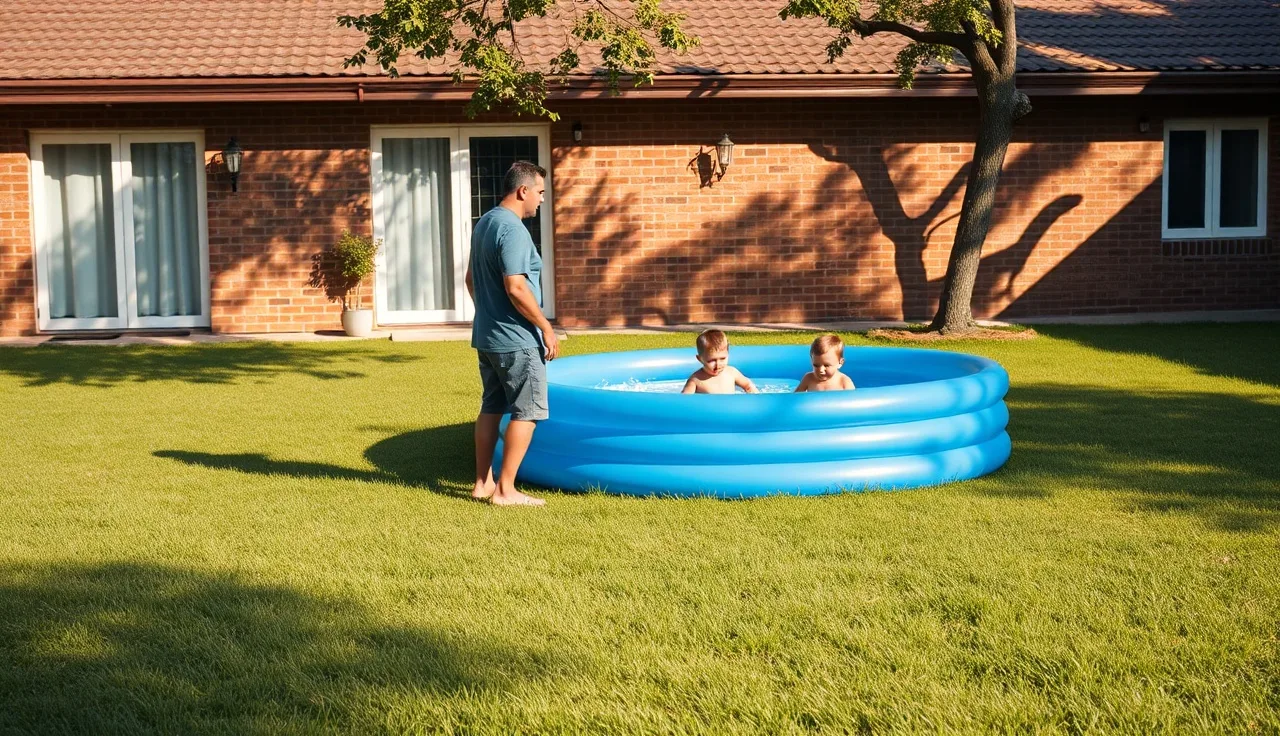
Most state daycare licensing rules cap wading pool water depth at 18 inches or less for children under age 5, require one staff member whose only job is watching the water, and tighten ratios to 1:1 or 1:5 during water play. Exact limits vary by state. Children drown in two inches of water, so regulators treat wading pools as a high-risk equipment category.
Why do licensing agencies regulate wading pool depth at all?
Drowning is the leading cause of injury death for children ages 1 to 4 in the United States. The CDC reports that from 2015 to 2019, an average of about 800 children under age 14 drowned each year, and toddlers make up a large share of that count [1]. A child that age can drown silently in under 60 seconds, in water as shallow as two inches.
That one fact shapes everything regulators do around water at licensed programs. A wading pool is not a summer accessory in the eyes of the state. It sits in the same risk category as pool fencing, window heights, and locked medication: places where the gap between a normal day and a disaster is very small.
Agencies set depth limits for two reasons. Shallower water lowers the consequence of a momentary lapse in supervision. And a hard number gives an inspector something to measure with a ruler during an unannounced visit. A rule that says "use good judgment" is unenforceable. A rule that says "no more than 18 inches" is not.
So almost every state that allows wading pools at daycare programs has three things in writing: a depth ceiling, a supervision ratio for water activity, and a draining or securing rule for when the pool sits idle.
What is the most common wading pool depth limit in daycare licensing rules?
Eighteen inches is the depth limit you will see most often in state childcare licensing rules. The actual number ranges from 12 inches to 24 inches depending on the state [2]. Some states set it by age group: 12 inches for infants and toddlers, 18 inches for preschoolers.
Here is a comparison across a sample of states. These figures come from publicly available licensing rule documents and were accurate as of mid-2025, but rules change. Verify with your state's licensing agency before your next inspection.
| State | Max depth (wading pool) | Source document |
|---|---|---|
| California | 18 inches | Title 22, Division 12, Section 101239 |
| Texas | 18 inches | 26 TAC § 746.3703 |
| Florida | 12 inches (under age 5) | 65C-22.003 FAC |
| Illinois | 18 inches | 89 Ill. Admin. Code 407.320 |
| New York | 18 inches | 418-1.11(l) NYCRR |
| North Carolina | 18 inches | 10A NCAC 09.0811 |
| Ohio | 18 inches | OAC 5101:2-12-25 |
| Georgia | 24 inches (small portable) | Rule 591-1-1-.33 |
The 18-inch standard did not come from a single federal mandate. The Child Care and Development Fund (CCDF), the federal block grant that pays for most licensed childcare slots, sets health and safety baselines states must meet, but it leaves water safety specifics to state licensing [3]. States converged on 18 inches independently, which tells you it is a practical judgment more than a political one.
One wrinkle catches people. Many states define a "wading pool" differently from a "swimming pool." A structure holding more than a set volume or depth (often 24 inches) can trip the full swimming pool licensing track, which means state health department permits, certified lifeguards, and a separate set of ratio rules. If you are eyeing a larger inflatable or anything permanent, confirm which bucket your state puts it in before you spend a dollar.
What supervision ratios apply specifically during wading pool use?
This is where providers get burned. Your normal daytime ratio, say 1:4 for infants or 1:10 for school-age kids, almost never applies during water activity. Nearly every state that allows wading pools requires a tighter, dedicated water-supervision ratio.
The common rule is that at least one staff member is assigned only to water supervision. That person cannot count children toward another activity's ratio, cannot be on a phone, and cannot help a kid with sunscreen or a snack while also watching the pool. Licensing language often calls this "constant direct supervision" [4].
Ratio requirements during water play, by representative state:
| State | Water supervision ratio | Additional requirement |
|---|---|---|
| California | 1:6 (under 5), 1 dedicated watcher | Staff cannot have other duties |
| Texas | 1:5 (under 18 mo), 1:6 (18 mo, pre-k) | Constant visual contact |
| Florida | 1:1 for non-swimmers | Written parent permission required |
| Illinois | 1:5 (under 3), 1:6 (3 to 5) | Within arm's reach of non-swimmers |
| North Carolina | Tighter of normal ratio or 1:5 | Designated watcher, no other duties |
Florida's 1:1 rule for non-swimmers is one of the strictest in the country [5]. In practice, if you cannot confirm a child can swim, one staff member watches that child alone during water play. For a program full of toddlers, that makes large-group wading pool time nearly impossible to staff.
Arm's reach shows up in a lot of state rules. It means exactly what it says: the supervising adult is close enough to grab the child within one arm's length, not watching from a lawn chair across the yard. Some states go further for children under two and require "touch supervision," where the staff member keeps a hand on or touching the child while the child is in the water.
What do inspectors actually check when they look at wading pool compliance?
If a licensor shows up during outdoor water play, expect them to check four things: the water depth, who is watching, what the ratio is, and whether the pool gets emptied and stored when it is not in use.
Depth gets measured with a ruler or tape at the deepest point. Some inspectors carry one. If yours doesn't, they may ask you to measure it in front of them. Fill the pool to the level you actually use, not to its rated capacity.
Ratio during observation means they count how many children are in or near the water and how many staff are present and actively watching. If your dedicated watcher slipped inside to use the restroom the second the inspector rounded the corner, that is still a ratio violation. A few states require a written water play supervision plan on file, and the inspector will hold what they see against what you wrote.
Post-activity draining is one of the most cited violations. Most states require wading pools to be emptied after each use and stored so they cannot collect rainwater. A partly filled pool sitting overnight, even by accident, can earn you a written deficiency. Some states go further and require inflatable pools to be deflated and stored or inverted so they physically cannot hold water.
A minority of states also require:
- Written parental permission for water activities (California, Florida, and several others)
- A posted water safety policy visible to staff
- A first aid kit within a set distance of the water area
- A staff member with current CPR and first aid certification present any time water activities happen
Not sure what your state wants? Ask for a pre-inspection consultation with your licensor. Most will walk you through their checklist before you start water activities for the season.
Does federal CCDF guidance say anything about wading pool depth?
No. The Child Care and Development Fund rules do not set a specific wading pool depth number. What CCDF does is require that any state accepting federal childcare subsidy funds keep health and safety standards covering, among other things, "prevention of and response to emergencies due to accidental injury" [3]. Water safety, including pool supervision, sits under that heading.
The 2016 CCDF final rule, effective November 2016, widened the baseline health and safety requirements states had to meet, and water safety was part of that expansion [12]. The Administration for Children and Families (ACF) publishes a health and safety standards guide that names swimming and water supervision as areas states must address in licensing [3].
What this means for you: if a state's wading pool rules are weak or missing, the state is under federal pressure to tighten them to keep CCDF eligibility. That is one reason water rules in state licensing have crept tighter over the past decade. States did not suddenly get more worried about pools. The funding lever gave them a reason to write down what used to be informal guidance.
CCDF also funds technical assistance to states through Child Care Aware of America, which publishes state-by-state licensing comparison reports [6]. Those reports flag whether a state has explicit water supervision requirements, which is a fast way to compare states without reading 50 sets of regulations.
Can a home daycare use a wading pool in the backyard?
Yes, in most states. But the rules for home-based programs are often stricter than for centers, or at least equally strict and harder to meet with a smaller staff.
The core problem for home daycare is the dedicated-watcher requirement. If you run a single-provider home with four children and the state requires one adult with no other duties during water play, you may not be legally able to do wading pool time without bringing in a second adult. A few family daycare associations have won modified rules, but most states apply the same ratio logic regardless of setting.
Three home-daycare-specific issues are worth knowing.
Fencing. Many states require any water feature in a home daycare's outdoor space, including a temporary inflatable pool, to sit inside a fence or barrier of a set height, often 4 feet, with a self-closing, self-latching gate. This comes straight from residential pool safety codes [8]. If your yard lacks that fencing, you may have to install it before you can legally use a wading pool.
Insurance. Your home daycare insurance policy may exclude water-related incidents if you never disclosed water activities to your carrier. Tell your insurer before the first day you set up a pool. Some add an endorsement, some exclude it outright. Finding out during a claim is the worst way to learn the answer.
Parental consent. Several states require written permission from each child's parent or guardian before the child touches water, even a wading pool. Keep those forms on file and refresh them yearly.
The practical move: call your licensor in April, before summer, and have them walk you through the requirements for your license type. Home daycare rules often live in a separate section of the licensing manual from center rules.
What temperature and sanitation rules apply to wading pool water?
Sanitation rules for small wading pools are less consistent across states than depth and supervision rules, but they exist and are worth knowing.
States that address sanitation usually take one of two paths: drain and refill with fresh water daily, or require the water to meet specific chemical treatment standards (typically the same free chlorine and pH ranges used for small swimming pools). Daily draining and refilling is far more common for small inflatable pools, because holding proper chemical levels in a small volume is tricky and inspectors are not usually set up to test it.
The CDC's Healthy Swimming program recommends free chlorine of 1 to 3 ppm and pH between 7.2 and 7.8 for recreational water used by young children [7]. Some states write those numbers into their licensing rules. Others just point to CDC or state health department guidance.
Temperature shows up in fewer states, but heat is a real risk. A dark inflatable pool in full sun can push water past 95 degrees Fahrenheit, which is uncomfortable and can be dangerous for infants. A handful of states cap permissible water temperature for infant and toddler play, though guidance here is thin.
Shared water is also a disease vector, especially for recreational water illnesses caused by Cryptosporidium and E. coli. The CDC notes that Cryptosporidium is highly chlorine-resistant and can survive for days in treated water [7]. That alone is an argument for fresh water changes every day, whether or not your state requires it.
What are the most common wading pool violations that lead to deficiencies or license actions?
Wading pool violations cluster around four issues, and every one of them is preventable with a written routine.
First, water left in the pool after the day ends. This is the single most common citation, because it is easy to forget at the end of a hot afternoon and easy for an inspector to spot on a morning visit the next day. Put draining on your closing checklist. Make one person responsible by name.
Second, ratio drift during water play. A child cries, another needs the restroom, and the dedicated watcher ends up split between the pool and another group. Good intentions do not fix this. A written procedure does. Some programs bring in a parent volunteer on wading pool days to hold ratio without pulling a staff member from another area.
Third, no written parental consent on file. States that require it tend to check for it, and a missing form is a deficiency even if the parent said yes out loud.
Fourth, pool depth over the maximum at fill. This usually happens because someone ran a hose and walked away. Mark a maximum fill line inside the pool with a permanent marker and train staff to stop there.
A license action after a pool incident is serious. A drowning or near-drowning at a licensed facility typically brings an immediate license suspension pending investigation, and in some states it triggers mandatory reporting to the child abuse registry as well as to the licensing agency. The daycare liability insurance fallout is harsh too: carriers usually exclude incidents where a known safety rule was broken.
ChildCareComp's compliance toolkit includes a seasonal water play checklist mapped to state-specific rules, so you can document that you checked depth, ratio, and drainage every single time.
How do wading pool rules differ from swimming pool rules at daycare programs?
The two categories often fall under completely different regulatory frameworks, which is why the distinction matters so much.
A wading pool in most state definitions is a portable, non-permanent structure filled to a shallow depth, usually below 24 inches, and it falls under general childcare licensing. A swimming pool, even a small above-ground model, is usually regulated under state health department rules for public recreational water, separate from and on top of childcare licensing.
Got a permanent in-ground pool, a large above-ground model, or any structure that meets your state's swimming pool definition? You almost certainly need a separate permit from the state or local health authority, a certified pool operator on staff, lifeguard certification for supervisors, and a facility inspection of the pool itself. Your childcare licensor cannot clear you on the pool alone.
The dividing line moves state to state. Florida draws it at 24 inches of depth. California uses a mix of depth and volume. Texas looks at whether the structure is permanent or portable. If you are buying any pool over roughly 18 inches deep or wider than about 10 feet, get a ruling from both your childcare licensor and your local health department before the pool shows up.
One cost note: above-ground pools big enough to be regulated as swimming pools run $1,500 to $5,000 for the structure alone, and the permit and compliance costs on top can easily beat the equipment cost for a small program [8].
What should you have documented before your first wading pool day of the season?
Documentation is the difference between a clean inspection and a deficiency pile. Before you set up the pool for the first summer day, confirm these are in writing.
A water play policy. One or two pages stating your depth limit, your ratio procedure during water play, your draining and storage steps, and which staff are CPR-certified and cleared to supervise water. Some licensing agencies hand you a template. Most expect you to write your own.
Parental consent forms. Signed and filed individually for each enrolled child who will take part. A family that enrolls mid-summer signs before their child goes near the pool.
Staff training records. Most states require at least one staff member present during water activities to hold current pediatric CPR and first aid certification. Keep photocopies of current cards in the staff file.
A pool depth log. Not required everywhere, but a simple daily log with the date, depth measured, who measured it, and who was the designated water supervisor takes three minutes and gives you evidence of compliance if a question ever comes up.
If you run a home-based program, your home daycare insurance certificate should show that water activities happen on the premises. Many policies want advance notice and an endorsement.
ChildCareComp's compliance documentation section has ready-to-use policy templates you can adapt to your state's language.
How can you find your specific state's wading pool licensing rules?
Start at the Child Care Aware of America state licensing page, which links to each state's licensing office and, in many cases, straight to the licensing regulations PDF [6]. Once you have the document, search it for "wading pool," "water play," "water activities," or "swimming." Most states use one of those four phrases.
If the regulation does not clearly cover wading pools, call your regional licensor. This is worth a 15-minute phone call. Ask four things: the maximum depth, the required supervision ratio, whether you need parental consent forms, and whether the pool must be drained daily. Write down the answers and the date, in case they matter during a later inspection.
The National Resource Center for Health and Safety in Child Care and Early Education at the University of Colorado maintains Caring for Our Children (CFOC), the national health and safety standards for childcare. CFOC addresses water safety in Standard 6.4.1.1, recommending that wading pools "must be emptied and sanitized after each use" and that water play be supervised by a staff member who has no other responsibilities [9]. CFOC is not law, but many states model their rules on it, and it is a useful benchmark for gaps in your state's formal rules.
For ongoing monitoring, join your state licensing agency's email list if it has one. Many states post rule change notices electronically, and water safety has been an area of active revision in multiple states since 2020.
Frequently asked questions
What is the maximum wading pool depth allowed at most licensed daycares?
Eighteen inches is the most common maximum depth in state daycare licensing rules, though the actual limit ranges from 12 inches (Florida, for children under 5) to 24 inches depending on the state. California, Texas, Illinois, New York, and Ohio all use an 18-inch ceiling. Always verify the exact number in your state's current licensing regulations before filling a pool for the season.
Can children drown in a wading pool?
Yes. A child can drown in as little as two inches of water, and toddlers can lose consciousness within 60 seconds of submersion. The CDC identifies drowning as the leading cause of injury death for children ages 1 to 4. That is why regulators treat even shallow wading pools as a high-risk environment requiring dedicated, undistracted supervision any time water is present.
Do daycare wading pool rules apply to home daycares?
Yes, in most states home-based (family) daycare programs follow the same wading pool depth and supervision rules as centers, and sometimes stricter ones. The main operational challenge is the dedicated-watcher requirement: if the state wants one adult whose only job is water supervision, a single-provider home daycare may need to bring in an extra adult to run wading pool activities legally.
Do I need parental permission for wading pool use at my daycare?
Several states, including California and Florida, require written parental consent before a child takes part in any water activity at a licensed facility, including a wading pool. Even in states that don't legally require it, collecting signed consent forms is smart. Keep them in each child's file, and collect new forms when a family enrolls or at the start of each program year.
How often must daycare wading pool water be changed?
Most states require wading pools to be fully drained and emptied after each daily use, with fresh water added the next time it is used. Some states additionally require chemical treatment (1-3 ppm free chlorine, pH 7.2-7.8 per CDC guidance) instead of daily replacement. Leaving water in the pool overnight is one of the most commonly cited licensing violations.
What staff-to-child ratio is required during wading pool use at daycare?
Water supervision ratios are tighter than normal classroom ratios in almost every state. Common requirements are 1:5 or 1:6 for children under age 5, with one staff member dedicated only to water supervision and exempt from counting toward any other activity's ratio. Florida requires 1:1 supervision for non-swimmers. Check your state's regulation for the specific ratio, which may differ by age group.
Does a daycare need a fence around its wading pool?
Many states require a barrier or fence around any water feature, including temporary inflatable pools, at licensed childcare facilities, often at least 4 feet high with a self-closing, self-latching gate. This requirement is commonly adapted from state residential pool safety codes. Home daycare providers should check whether their outdoor space already meets this standard before setting up a pool.
What happens to a daycare license if a child drowns or nearly drowns in a wading pool?
A water-related child emergency typically triggers an immediate licensing investigation and, in many states, an automatic license suspension pending the outcome. Depending on the circumstances, the licensor may pursue revocation, fines, or mandatory reporting to child protective services. Liability insurance implications are also severe, especially if the investigation finds that a known safety rule was being violated at the time.
Is there a federal rule about wading pool depth at daycare programs?
No federal rule specifies a wading pool depth limit. The CCDF (Child Care and Development Fund), which funds childcare subsidies, requires states to keep health and safety standards that include water safety, but the specific depth limit is set in each state's licensing regulations. The Administration for Children and Families publishes guidance that references water supervision, and states must address it to keep CCDF eligibility.
Do I need a separate permit for a wading pool versus a swimming pool at a daycare?
Usually yes, if the structure meets your state's definition of a swimming pool rather than a wading pool. Portable inflatable pools under roughly 18-24 inches deep are typically covered by childcare licensing rules alone. Larger or permanent structures often require a separate health department permit, certified pool operator, and additional inspections. Call both your childcare licensor and your local health department before buying any pool over 24 inches deep.
What is the Caring for Our Children (CFOC) standard for daycare wading pools?
CFOC Standard 6.4.1.1, published by the National Resource Center for Health and Safety in Child Care at the University of Colorado, recommends that wading pools be emptied and sanitized after each use and that water play be supervised by a staff member with no other responsibilities. CFOC is not binding law, but many state licensing rules are modeled on it and it is a widely cited benchmark.
Should my daycare's water play be covered by liability insurance?
Yes, and you must disclose water activities to your insurer before they happen. A standard home daycare or center liability policy may exclude water-related claims if the carrier was not told that water activities take place on the premises. Some insurers add an endorsement, others exclude it entirely. Notify your insurer each year before the summer season and confirm your coverage in writing.
What documentation should a daycare keep for wading pool use?
Keep a water play policy on file, signed parental consent forms for each participating child, staff CPR and first aid certification copies, and ideally a daily log recording water depth measured, the name of the designated water supervisor, and confirmation that the pool was drained at day's end. This paper trail takes minutes to maintain and can settle a licensing question fast.
Sources
- CDC, Drowning Prevention: Drowning is the leading cause of injury death for children ages 1 to 4; an average of about 800 children under 14 drowned annually from 2015 to 2019.
- Administration for Children and Families, CCDF Health and Safety Requirements: CCDF requires states to have health and safety standards covering prevention of and response to emergencies due to accidental injury, including water safety.
- Child Care Aware of America, State Fact Sheets and Licensing Comparisons: Child Care Aware publishes annual state-by-state licensing comparison reports tracking whether states have explicit water supervision requirements.
- CDC, Healthy Swimming Program: CDC recommends free chlorine levels of 1 to 3 ppm and pH between 7.2 and 7.8 for recreational water used by young children; Cryptosporidium is highly chlorine-resistant and can survive days in treated water.
- Consumer Product Safety Commission, Pool Safely: Barrier and fencing requirements for residential and child-serving pools; portable pool safety guidance.
- National Resource Center for Health and Safety in Child Care, Caring for Our Children 4th Edition: CFOC Standard 6.4.1.1 states that wading pools must be emptied and sanitized after each use and that water play should be supervised by a staff member who has no other responsibilities.
- Texas Health and Human Services, Child Care Licensing: 26 TAC § 746.3703 sets maximum wading pool depth at 18 inches and requires constant visual contact during water play in Texas licensed centers.
- Administration for Children and Families, Office of Child Care: The 2016 CCDF final rule (effective November 2016) expanded baseline health and safety requirements, including water safety and supervision, that states must meet to maintain CCDF eligibility.