Infant Safe Sleep Requirements in Arizona Childcare
TL;DR
- Infants must always be placed on their backs to sleep in Arizona childcare centers.
- Cribs must meet current CPSC standards with a firm, flat mattress and fitted sheet only.
- No blankets, pillows, bumper pads, stuffed animals, or other soft items in the crib.
- Staff must visually check sleeping infants at least every 15 minutes.
Back-to-Sleep Policy
The Department of Health Services (ADHS) requires all licensed childcare centers in Arizona to follow safe sleep practices for infants. The most fundamental rule: infants must always be placed on their backs to sleep. This applies to nap time and any other time an infant is put down to rest. No exceptions, even if a parent requests a different sleep position.
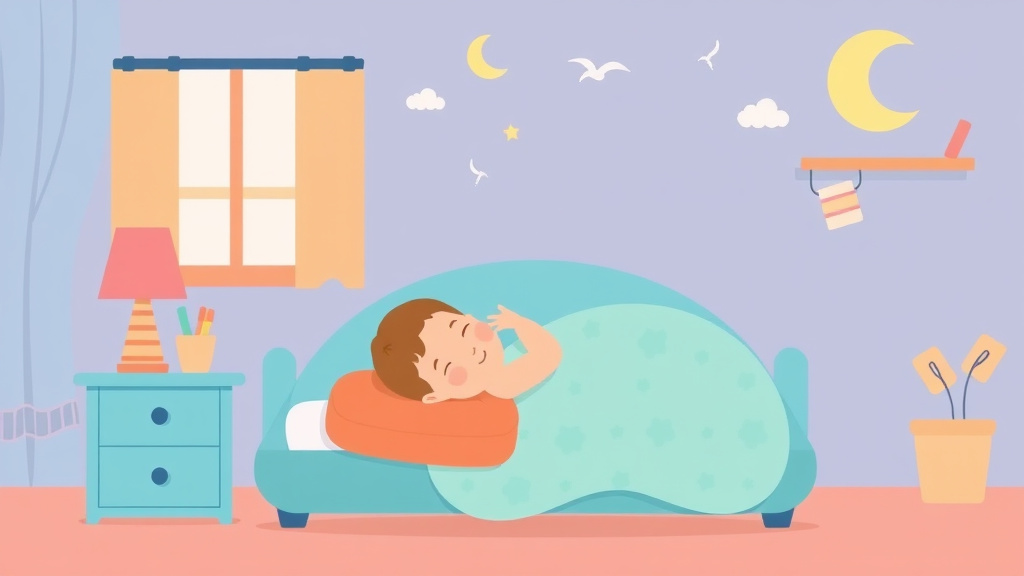
If an infant rolls over to their stomach on their own and can roll both ways independently, they may be left in that position. However, the initial placement must always be on the back. Staff should document when an infant begins rolling independently and note this in the child's file. If a parent provides a physician's note requesting a different sleep position for medical reasons, consult with your licensing consultant before making any accommodation.
The back-to-sleep policy is based on decades of research showing that placing infants on their backs significantly reduces the risk of Sudden Infant Death Syndrome (SIDS). As a childcare provider, you play a critical role in following this practice consistently. Even one lapse can have devastating consequences.
Crib Standards and Setup
| Requirement | Arizona Standard |
|---|---|
| Crib type | Must meet current CPSC standards |
| Mattress | Firm, flat, fits snugly in crib frame |
| Bedding | Fitted sheet only, no blankets or pillows |
| Spacing between cribs | Minimum 2 feet on all accessible sides |
| Drop-side cribs | Prohibited |
| Crib condition | No broken slats, missing hardware, or modifications |
| Crib location | Away from windows, blinds, cords, heaters |
Drop-side cribs are banned in all licensed childcare settings. Cribs must be checked regularly for loose hardware, broken slats, and any modifications that could create a hazard. If a crib is recalled, it must be removed from use immediately. Check the CPSC website monthly for new recalls and compare them against the cribs in your center.
The mattress must fit snugly inside the crib frame with no gaps. If you can fit more than two fingers between the mattress edge and the crib side, the mattress is too small. Mattress covers must be waterproof and easy to clean. Replace mattresses that are worn, torn, or no longer firm.
What Cannot Be in the Crib
The crib should contain nothing except the infant and a single fitted sheet. No blankets, quilts, pillows, bumper pads, wedges, positioners, stuffed animals, or toys. These items increase the risk of suffocation and are a common citation during inspections.
If a parent brings a comfort item such as a stuffed animal or blanket, explain the policy and store the item in the child's cubby. Provide a copy of your safe sleep policy to every parent at enrollment. Having parents sign an acknowledgment of the policy protects both the children and your center. Some parents may push back, especially if their child sleeps with a blanket at home. Stand firm. The policy exists to protect their child.
Sleep sacks and wearable blankets that are the correct size for the infant and do not have hoods may be used as an alternative to blankets. Check with the ADHS for specific guidance on which sleep sacks are acceptable in your state.
Supervision During Sleep
Arizona requires that staff visually check sleeping infants at least every 15 minutes. Checks should verify that the infant is breathing, that their face is uncovered, that they have not become wedged against the side of the crib, and that they are in a safe sleep position. Document each check with the time, the staff member's initials, and any observations.
Many centers use a sleep check log posted near the cribs. This makes it easy for staff to record checks in real time and provides documentation for inspectors. You can adapt the same paper or spreadsheet sleep check log approach using the templates in the ChildCareComp Startup Pack.
The sleep environment should be kept at a comfortable temperature, typically 68 to 72 degrees F. The room should be dim but not completely dark. Staff need enough light to visually check each infant during sleep checks. Background noise should be kept to a minimum, though white noise machines at a safe volume are acceptable in most states.
Staff Training on Safe Sleep
All staff who care for infants must be trained on safe sleep practices before they are left alone with infants. This training should cover back-to-sleep positioning, proper crib setup, prohibited items, sleep check procedures, and how to respond if an infant is found in an unsafe sleep position.
Refresher training should be provided annually and whenever a new staff member joins the infant room. Keep training records on file, including the date, topics covered, the trainer's name, and signatures of attendees. Inspectors will review these records during visits to verify that all infant room staff have received current training.
Include safe sleep practices in your parent handbook and discuss them during enrollment conferences. When parents understand why the policy exists and how consistently you enforce it, they are more likely to support it. Consistency between home and childcare also benefits the infant.
For more on infant care requirements, see Infant Safe Sleep Requirements in Childcare Centers.
Building Compliance Into Your Daily Operations
The difference between centers that struggle with compliance and centers that handle it smoothly comes down to systems. Compliant centers do not have smarter staff or more resources. They have routines and structures that make compliance automatic rather than reactive.
Start with your morning routine. Before children arrive, the opening staff member should walk through each room and check for hazards, verify that posted items are current, confirm that cleaning supplies are locked, and check that first aid kits are stocked. This five-minute walkthrough catches problems when they are easy to fix, before children and inspectors arrive.
Throughout the day, track ratios at the top of every hour. When staff take breaks, verify that coverage is in place before they leave the room. During meal service, check that menus are posted, allergy lists are visible, and temperature logs are current. At sign-out time, verify that every child is released to an authorized person and that attendance records are completed.
At the end of each day, review any incidents that occurred and make sure they are documented. Check that medication logs are complete. Verify that the facility is clean and secure. This closing routine takes only a few minutes and ensures that nothing carries over as an unresolved issue.
Weekly, pull five to ten random child and staff files and audit them for completeness. Monthly, review fire drill logs, playground conditions, and staff training records. Quarterly, conduct a full mock inspection. This layered approach to compliance means you are always prepared, regardless of when an inspector shows up.
ChildCareComp does not provide a dashboard or a compliance routine to log into. What it provides is the $79 one-time Daycare Licensing Startup Pack (your state's requirements, an inspection prep checklist, and staff credential tracking templates in one document) and an optional $29/mo (or $199/yr) Compliance Membership that sends update notices and renewal reminders as your state's rules change.
Why Tracking Compliance Manually Fails
Many childcare directors try to manage compliance with spreadsheets, paper checklists, and calendar reminders. This works when your center is small and your team is stable. But as you grow, add staff, enroll more children, and deal with turnover, manual tracking breaks down. A forgotten renewal here, a missed training deadline there, and suddenly you are walking into an inspection with gaps you did not know existed.
The problem with manual tracking is that it depends on one person remembering everything. When that person is sick, on vacation, or simply overwhelmed with the daily demands of running a childcare center, compliance tasks get missed.
A written, organized reference solves a different part of this problem: it removes the need to research and re-derive your state's requirements from scratch. ChildCareComp's $79 one-time Daycare Licensing Startup Pack gives you your state's requirements, your inspection prep checklist, and your staff credential tracking templates in one document, so the information exists somewhere other than one person's memory. An optional $29/mo (or $199/yr) Compliance Membership keeps that document current as your state's rules change.
The cost of a violation, in fines, extra inspections, or lost enrollment, is unpredictable and can be significant, though it varies by state and severity. A $79 one-time pack, or $29/mo if you add the membership to keep it current, is a small, predictable cost by comparison.
Related Articles
- Infant Safe Sleep Requirements in Childcare Centers
- Infant Safe Sleep Requirements in Alabama Childcare
- Infant Safe Sleep Requirements in Alaska Childcare
Understanding Regulatory Hierarchy
Childcare licensing requirements come from multiple sources, and understanding the hierarchy helps you prioritize compliance efforts. Federal law sets certain baseline requirements, primarily through the Child Care and Development Block Grant (CCDBG) Act, which requires states to meet specific health, safety, and quality standards as a condition of receiving federal childcare funding.
State law and regulations build on the federal baseline. Your state legislature sets the statutory framework for childcare licensing, and the designated licensing agency develops detailed regulations that implement those statutes. These state-level regulations are the primary standards against which your center is inspected.
Local ordinances may add additional requirements, particularly related to zoning, building codes, fire safety, and health department standards. Your center may need permits or approvals from local agencies in addition to your state childcare license.
When requirements from different levels conflict, the most restrictive standard generally applies. If your state requires a 1:4 ratio for infants but your local ordinance requires 1:3, you must meet the 1:3 standard. This is why it is important to understand all the regulatory requirements that apply to your specific location, not just the state licensing rules.
License Types and Capacity
Most states issue different types of childcare licenses based on the size and structure of the operation. Common license types include center-based licenses (for facilities serving larger numbers of children), group home licenses (for smaller programs typically operated in a residence), and family home licenses (for the smallest programs with the operator as the primary caregiver).
Each license type has its own set of requirements, and the requirements for center-based programs are typically the most extensive. Your licensed capacity, the maximum number of children you are authorized to serve at any one time, is determined during the licensing process based on your facility's square footage, the number and configuration of rooms, outdoor play space, bathroom facilities, and staffing capacity.
Operating over your licensed capacity is a serious violation. Even temporarily exceeding capacity during a field trip pickup, for example, can result in a citation. Monitor your daily attendance against your capacity limits, and have a plan for days when attendance unexpectedly exceeds your typical numbers.
If you want to increase your capacity, you must apply for a license modification. This typically requires demonstrating that your facility can accommodate additional children in terms of space, staffing, and safety. The modification process involves an inspection and may take several weeks to complete. Plan ahead if you anticipate enrollment growth.
Additional Resources
These related guides may help you address connected compliance areas:
- Health Plans for Children with Special Needs in Childcare
- What to Expect During a Childcare Inspection in West Virginia
- Cold Weather Safety Guidelines for Childcare Centers
- Changing Table Safety and Sanitation in Childcare
Try our free tools
Frequently Asked Questions
How do I ensure my childcare center follows Arizona's back-to-sleep policy?
The Department of Health Services (ADHS) requires all licensed childcare centers in Arizona to place infants on their backs to sleep, both for nap time and overnight. This is the most fundamental safe sleep practice.
What crib standards must my childcare center meet in Arizona?
Drop-side cribs are banned in all licensed childcare settings. Cribs must be checked regularly for loose hardware, broken slats, and any modifications that could create a hazard. If a crib is recalled, it cannot be used until it has been repaired or replaced.
What Cannot Be in the Crib?
Arizona requires that staff visually check sleeping infants at least every 15 minutes. Checks should verify that the infant is breathing, that their face is uncovered, that they have not become wedged against the side of the crib, and that they are in a safe sleep position. Document each check with the time, the staff member's initials, and any observations.
Why Tracking Compliance Manually Fails?
All staff who care for infants must be trained on safe sleep practices before they are left alone with infants. This training should cover back-to-sleep positioning, proper crib setup, prohibited items, sleep check procedures, and how to respond if an infant is found in an unsafe sleep position. Refresher training should be provided annually and whenever a new staff member joins the infant room.
How can I train my staff on safe sleep practices in Arizona?
The difference between centers that struggle with compliance and centers that handle it smoothly comes down to systems. Compliant centers do not have smarter staff or more resources. They have routines and structures that make compliance automatic rather than relying on individual vigilance.
Why is it important to build safe sleep compliance into my childcare center's daily operations in Arizona?
Many childcare directors try to manage compliance with spreadsheets, paper checklists, and calendar reminders. This works when your center is small and your team is stable. But as you grow, add staff, enroll more children, and deal with turnover, manual systems become unwieldy and prone to errors.
Why Tracking Compliance Manually Fails?
Many childcare directors try to manage compliance with spreadsheets, paper checklists, and calendar reminders. This works when your center is small and your team is stable. But as you grow, add staff, enroll more children, and deal with turnover, manual tracking breaks down.